










|
|
Viennese Actionism: the opposite pole to home improvement Tassilo von Blittersdorff, 2012-03-22 The history of art is the history of how art is received. Susan Jarosi's article concerning "The image of the Artist in Performance Art" in the autumn edition 2011 of Sztuka i Dokumentacja (Art and Documentation) journal shows through the example of Rudolf Schwarzkogler, how, starting with an ambivalent misinterpretation, a persistent myth evolved, which obscures the perception of Schwarzkogler's work. Artists, especially when they do not adapt to the norms of society, when they are provocative and have critical ideas, have always been good targets for negative public opinions or for scandals. Such artists’ work was often downgraded by mainstream taste, sometimes even purified of its contents that were disliked and degraded to mere aesthetic objects. Misunderstanding is a frequent problem for performance art, which really has life only in the moment of action. All posterior documentation works on different levels of reality. The interpretation of such documentation is on the border of authenticity, misinterpretation and manipulation. Dealing with pieces of performance-art-document is always a matter of interpretation. Not only on the intellectual level of art-criticism and theory, but also considering more practical things like presenting performance-art-documents, selling, collecting, restoring and using them in the cultural-political context of exhibitions. Presentations of pieces of (performance)-art-documentation are context-related and sometimes they can tell a lot about the circumstances and the background of exhibitions or publications. In the sixties, when Actionism became public, most adult Austrians had still been born and brought up in the 'Third Reich', which means that they remembered Nazi-doctrines against 'Entartete Kunst' and retained traumatic experiences of the war and the time after the war. In the sixties (and for some people, till nowadays) the most frequent and popular misunderstanding about Viennese Actionism was, that Actionism is not art, but pornography, blasphemy and the tormenting of animals, done by the mentally ill, not by artists. People projected their own emotions with no intellectual reflection upon the artworks and in this way became involved in a provocative misunderstanding – the trap of Viennese Actionism. Austrian justice imposed hard penalties against Action-artists. After the, so called Uniferkelei (the action Kunst und Revolution, on June 7th, 1968 in the auditorium of the Vienna university's new institute building) several of them were imprisoned or had to emigrate from Austria. Tabloids like Kronenzeitung or Express used the opportunity to increase the number of copies sold by frequent sensational reports about Vienna Actionists' scandals and gave public opinion an opportunity to work off their frustrations against contemporary art. One absurd example of this climate is the 'counter–Actionism' of the self declared 'porno hunter', the ultra-right-catholic-activist Martin Humer, who destroyed, almost unpunished, several abstract artworks.
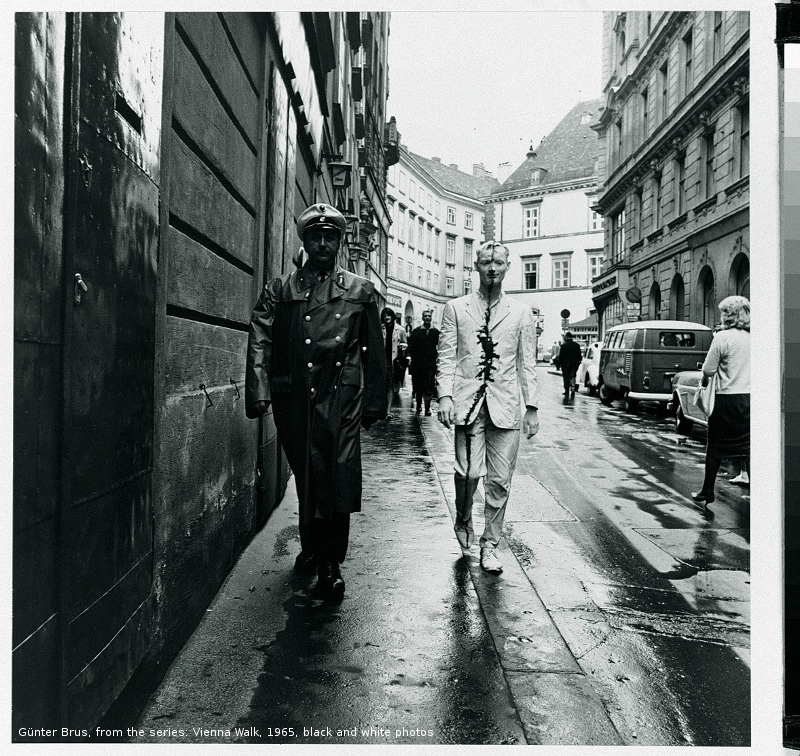
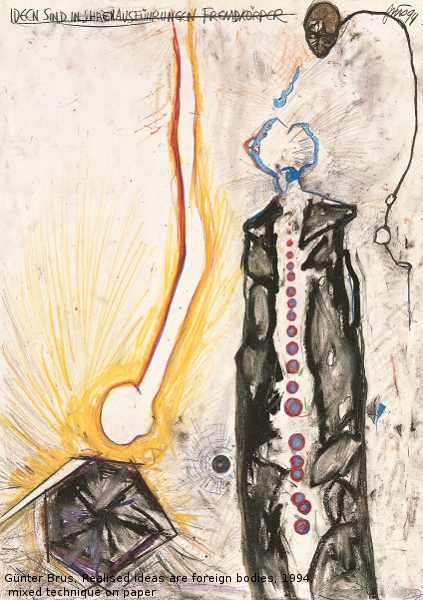
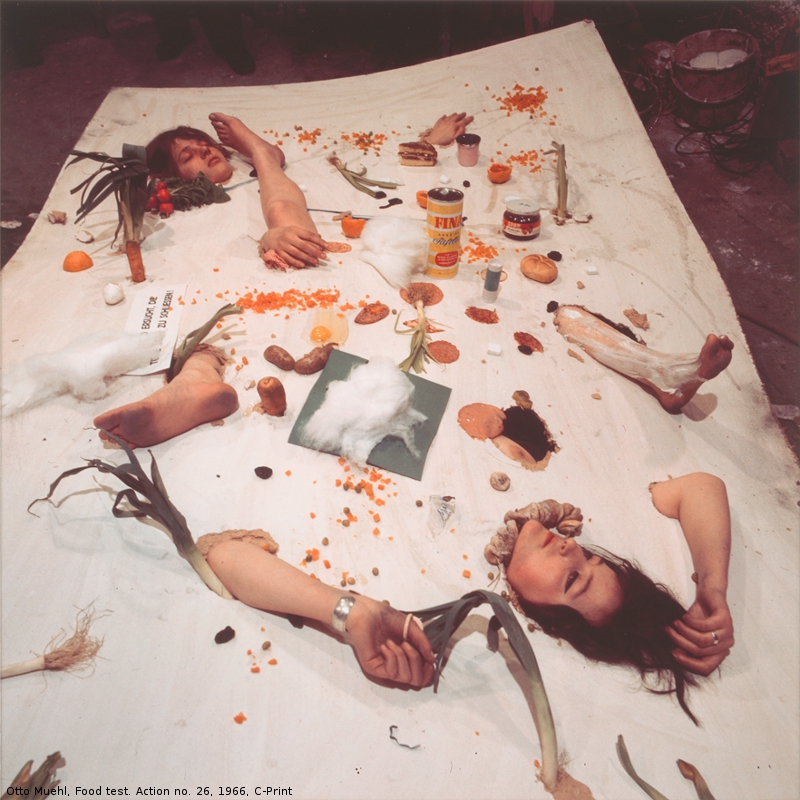
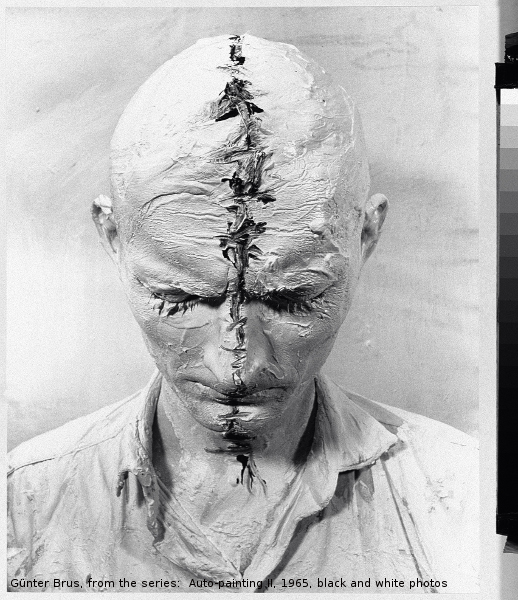
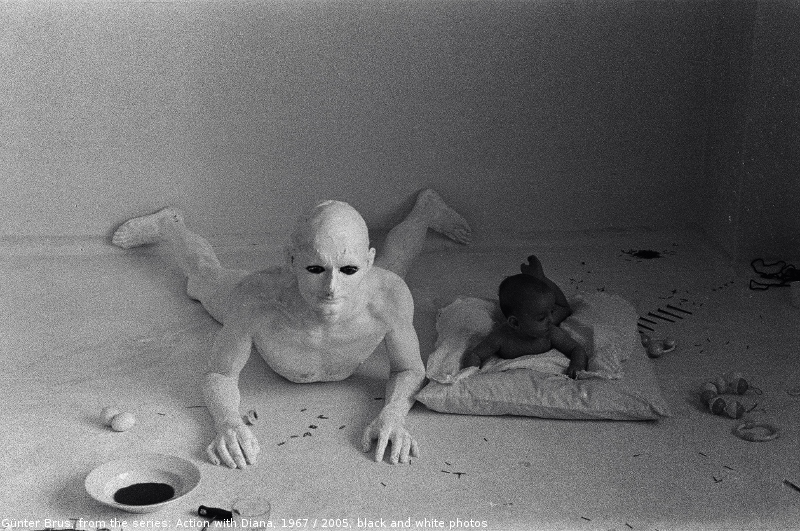
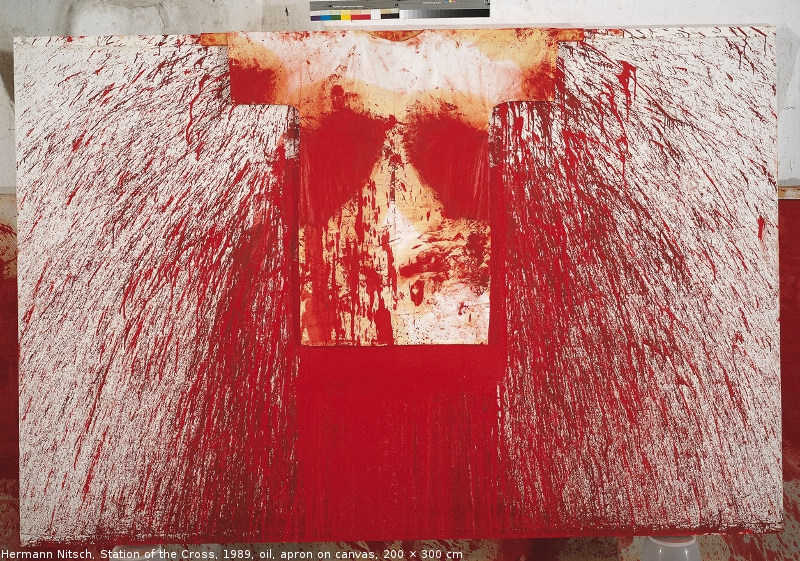
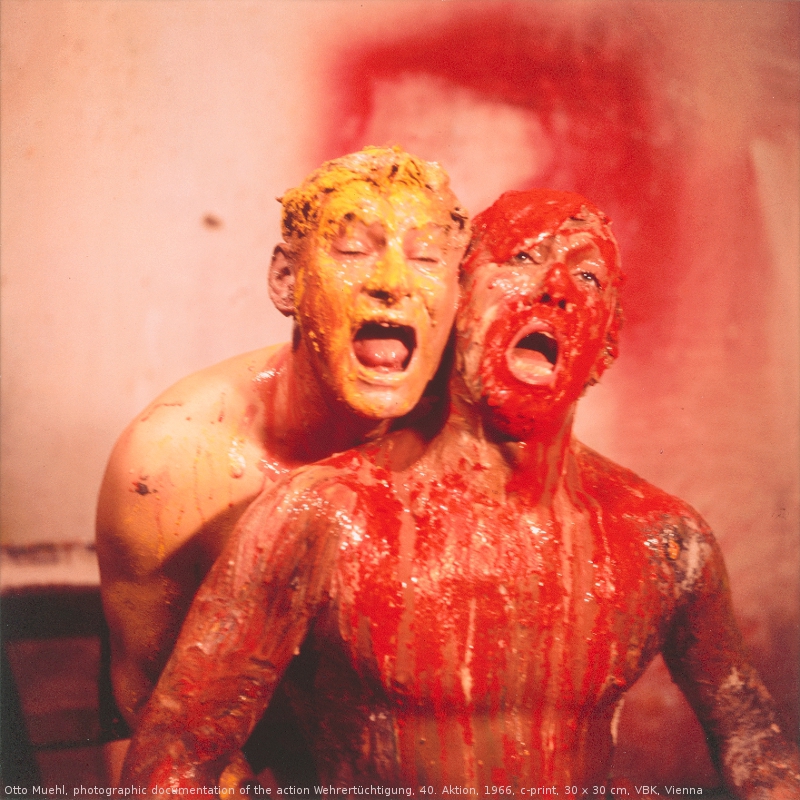
At first, the real public of the Vienna Actionists' performances were only a small group of friends and art-lovers. With the beginning of the seventies the interest of galleries, art critics, art collectors and museum- and exhibition-curators started to arise. Finally, in the eighties Viennese Actionism became internationally established as Austria's most important contribute to the Avant-garde, which expanded the concept of art. All the 259 exhibited works are the property of the collectors Karlheinz and Agnes Essl. In 1976 Karlheinz Essl founded 'Baumax' – an Austrian hypermarket chain with home improvement and do-it-yourself goods, including 153 stores in 9 European countries. The private collection, with over 7000 pieces is one of the biggest in Austria and contains international and Austrian contemporary art. Since 1999 it is placed in the Essl Museum in Klosterneuburg near Vienna. Works by Günter Brus, Hermann Nitsch, Rudolf Schwarzkogler and Otto Muehl, as important protagonists of the Vienna Aktionism are continued in the Essl collection and were presented during the exhibition. In the centre of the show there was a photo-series with documentation of their performances. These Actionism documents were harmoniously, aesthetically and didactically presented as a series of photographic objects. However, the exhibition did not reconstruct the context of Actionism whatsoever. Schüttbilder by Nitsch, mostly created during performances in the Essl-museum and other later works by Brus and Mühl explain the development of these artists after the classical Actionism-period. Screens with videos showing two performances of Hermann Nitsch's 'orgy and mystery theatre' in the Essl-institutions from 1996 and 2003 and a Video-compendium of Günter Brus aimed to bring the Viennese Actionism closer to the Polish public. The exhibition is an interesting document about the reception of Viennese Actionism, and a perfect self-promotion of the Essl-Museum. The exhibition ended on January 29th, 2012, the catalogue is the first comprehensive Polish publication about Viennese Actionism and has several sections. There are reproductions of works by Günter Brus, Otto Muehl, Hermann Nitsch and Rudolf Schwarzkogler as well as a selection of their writings, such as manifestos and accounts of actions. It also contains critical essays by Austrian and Polish Actionism specialists.
|