











|
|
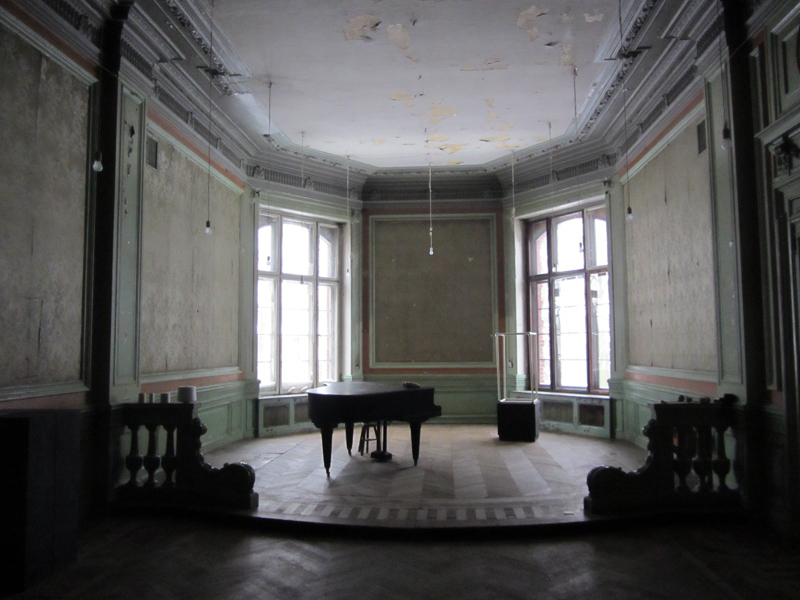
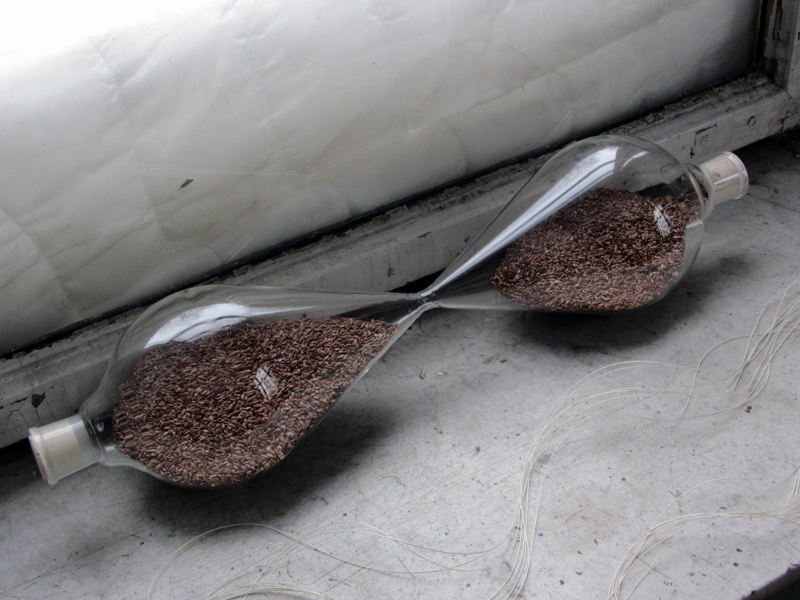
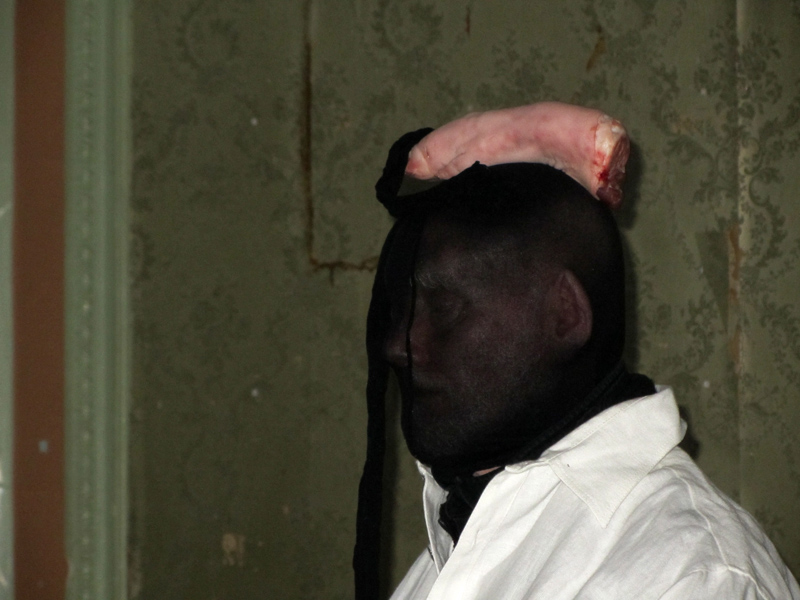
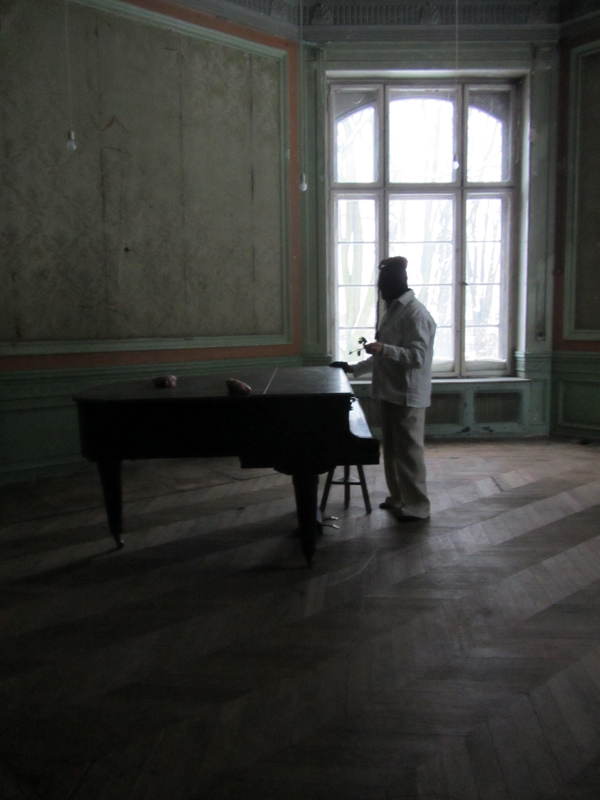
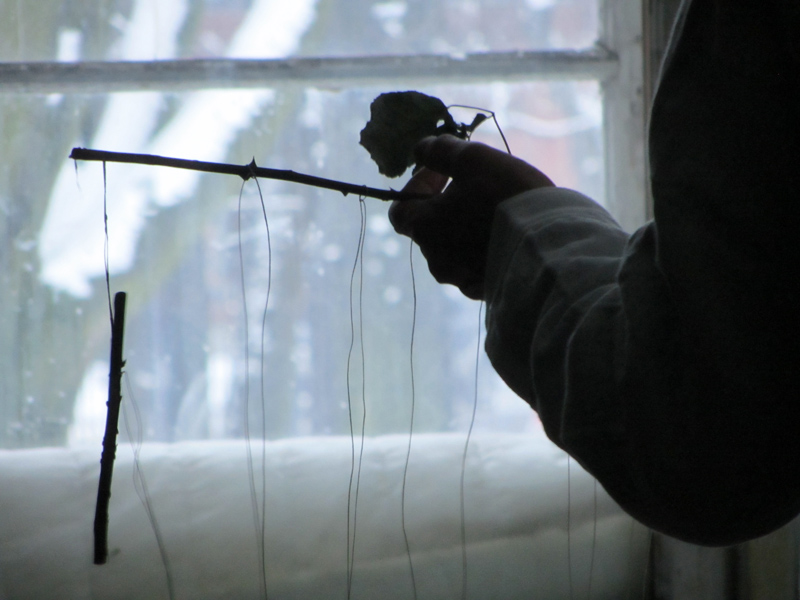
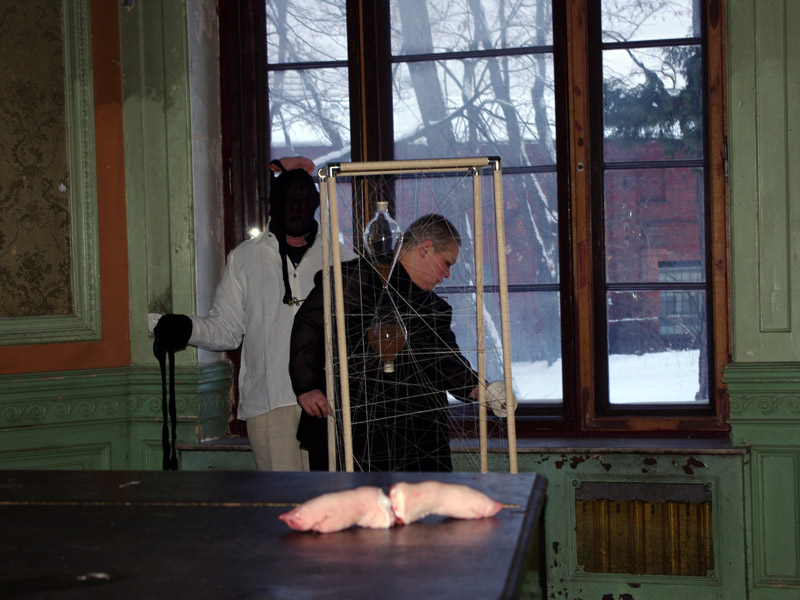
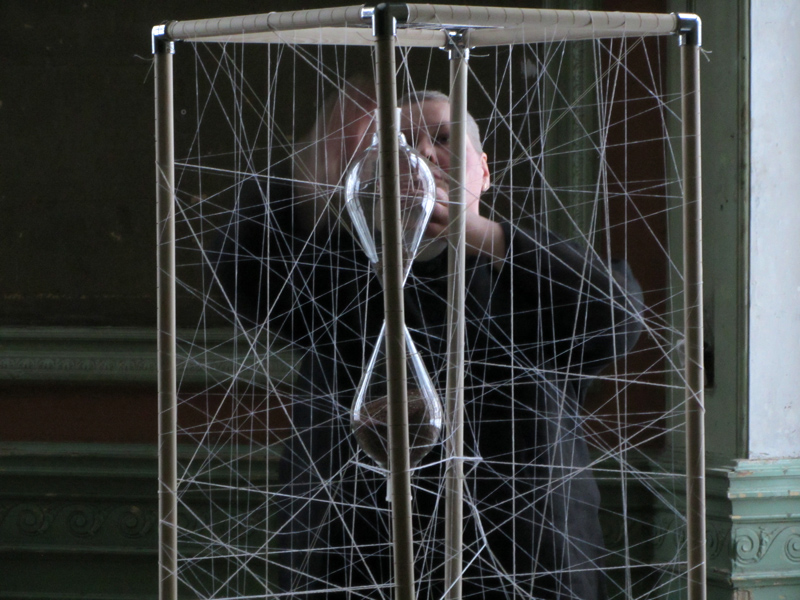
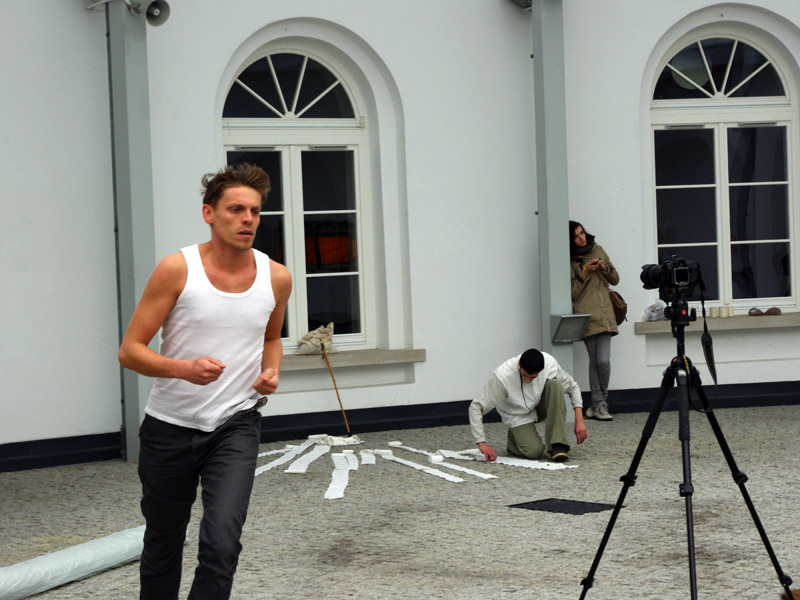
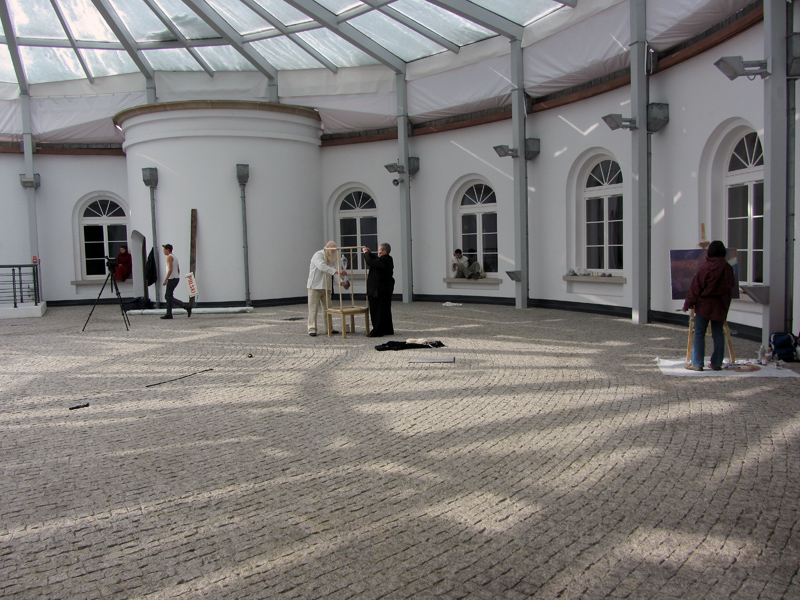
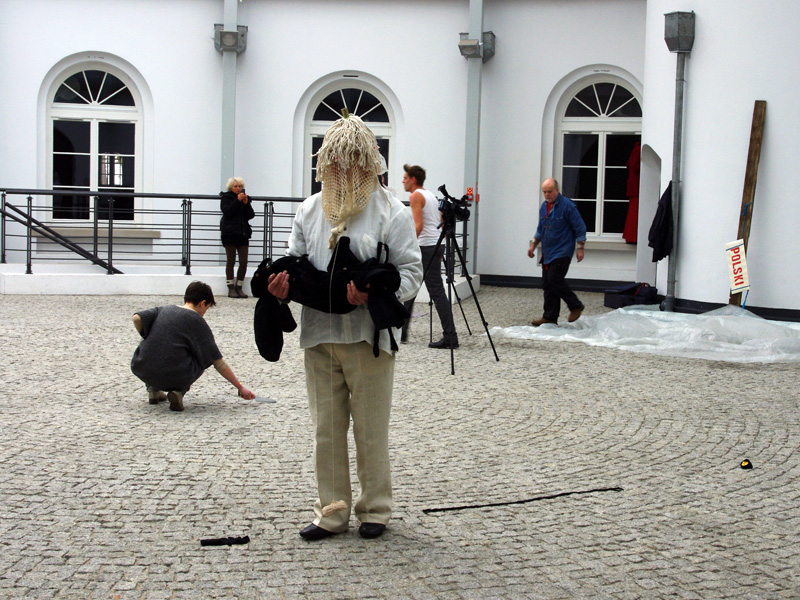
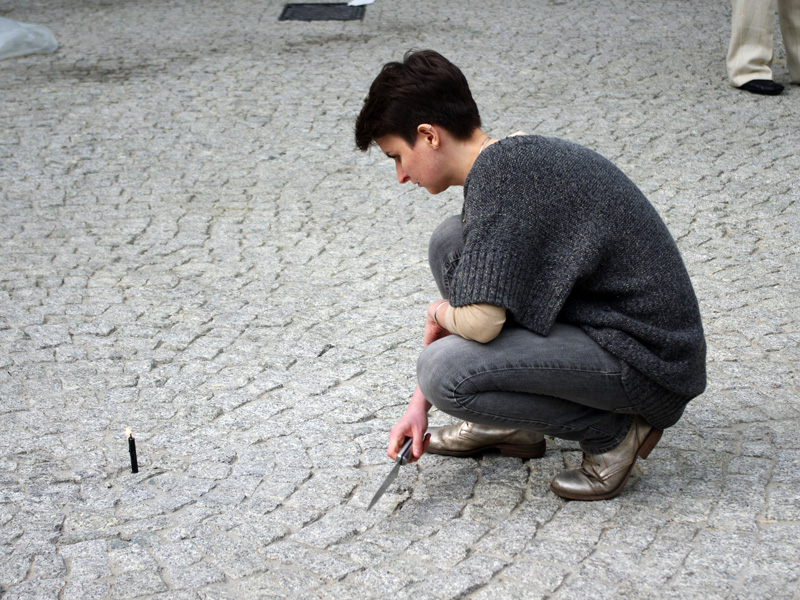
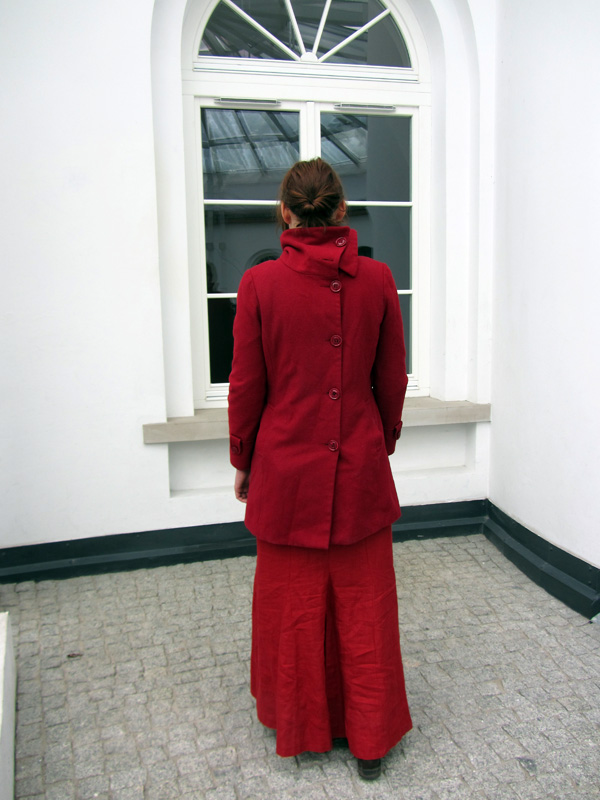
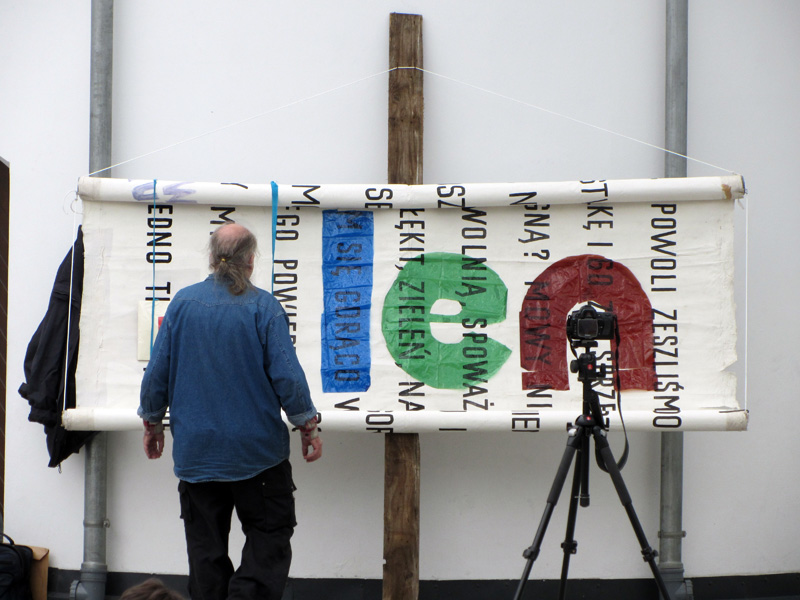
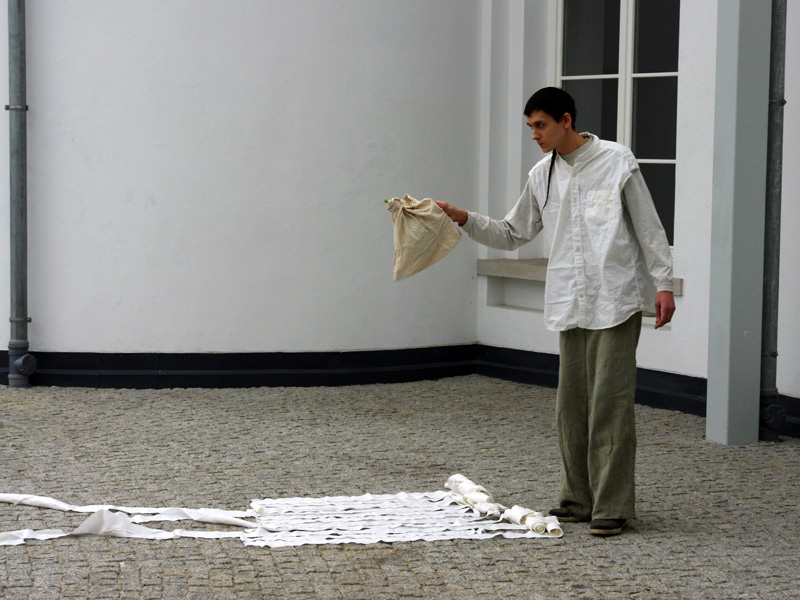
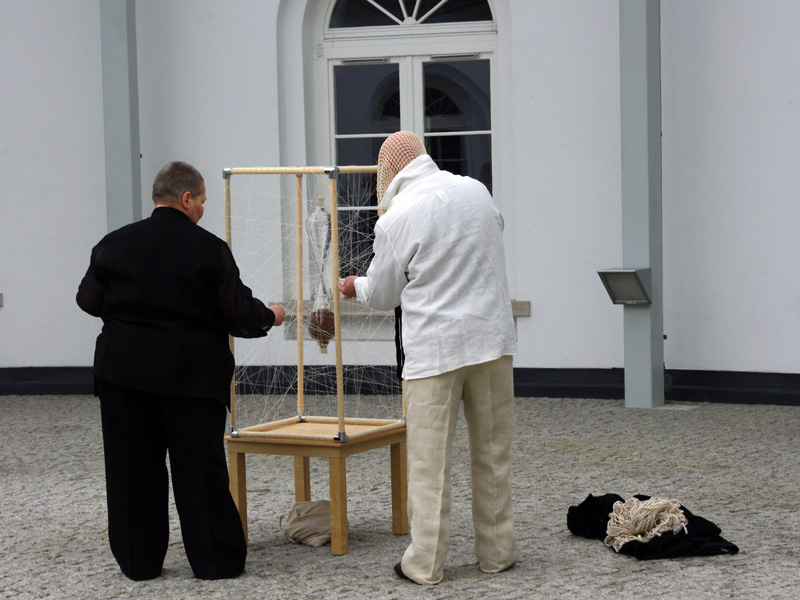
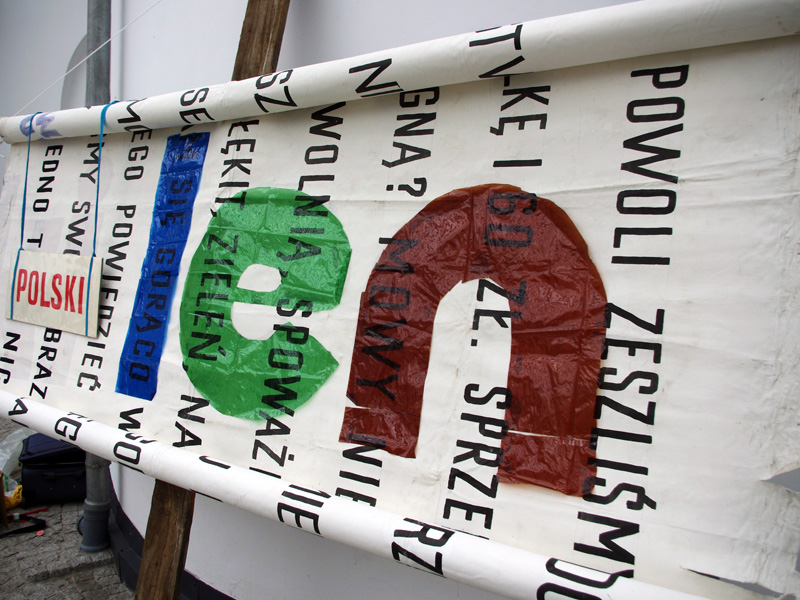
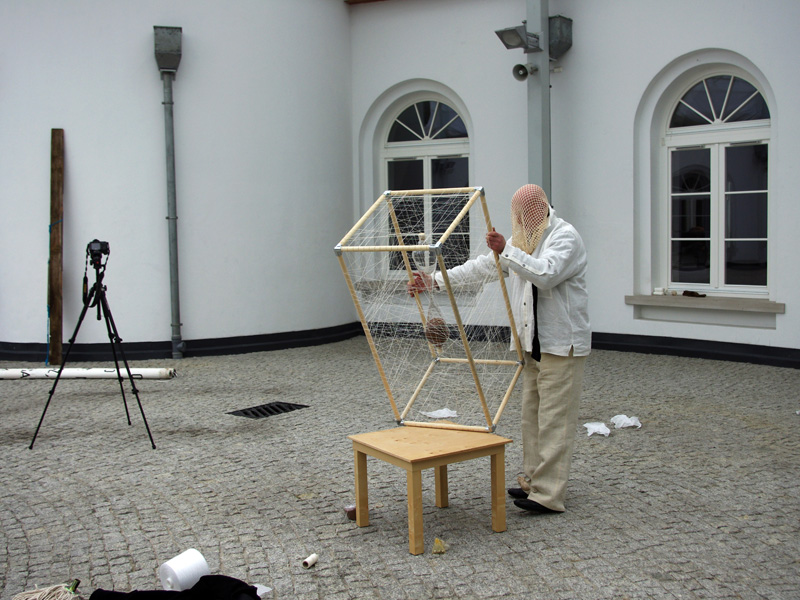
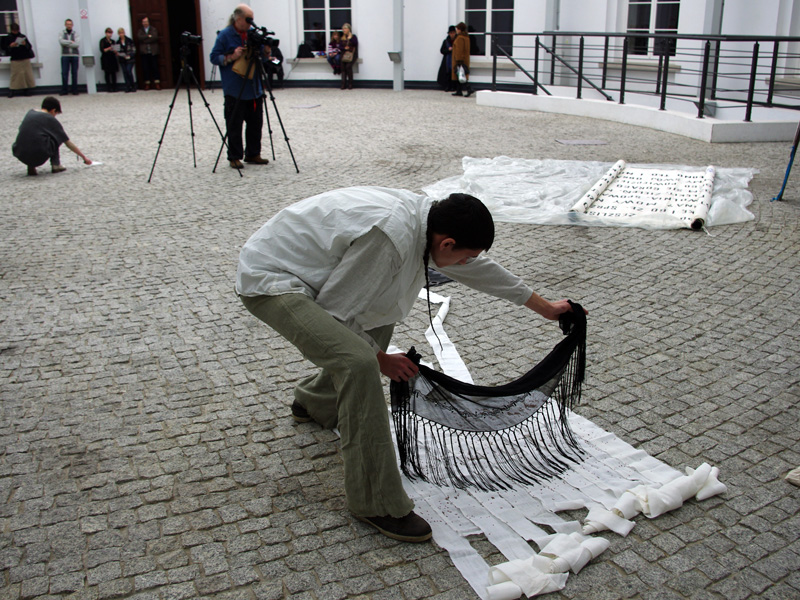
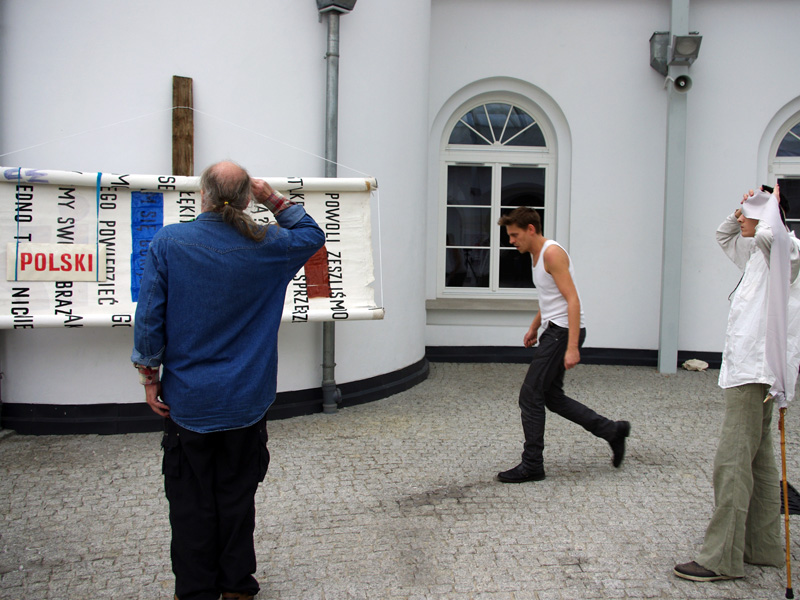
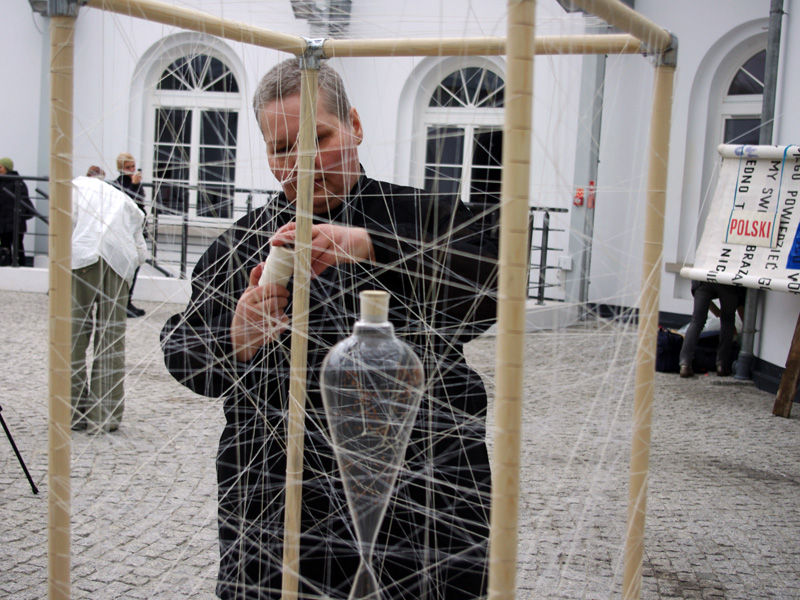
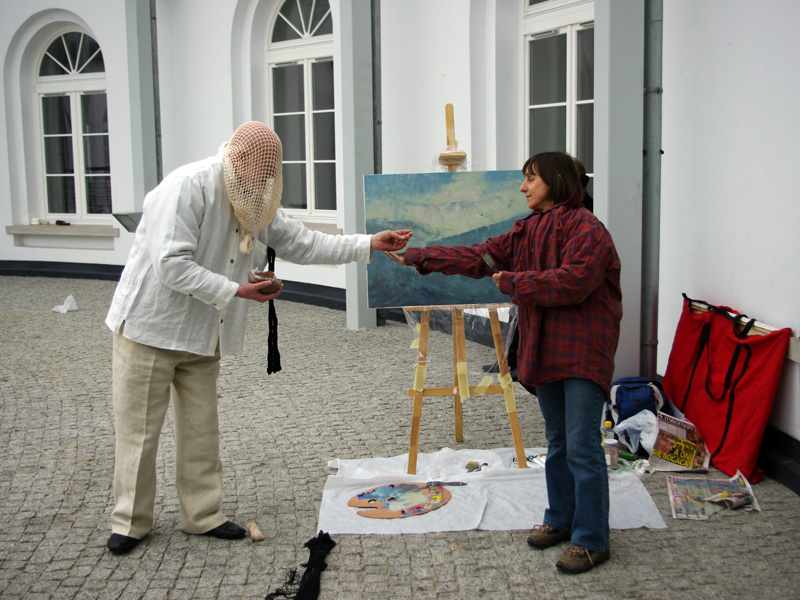
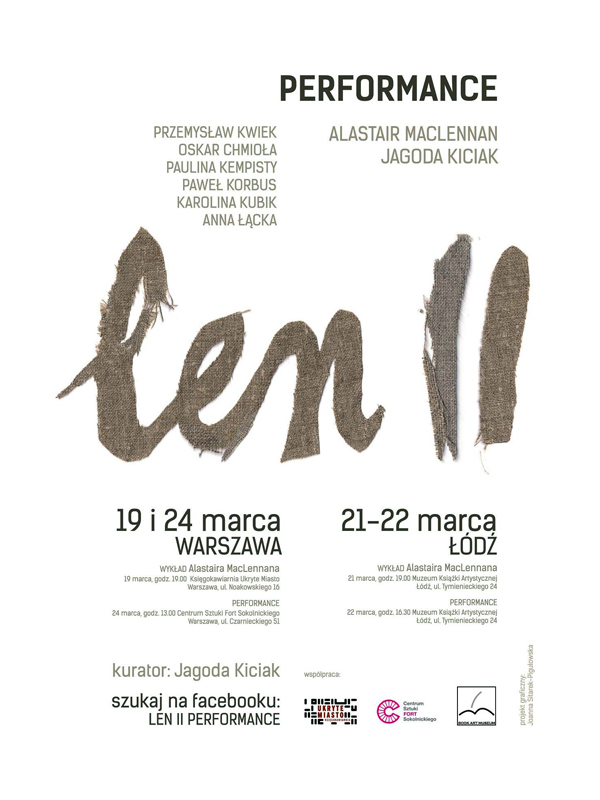
FLAX 2 My private event Jagoda Kiciak, 2013-05-27 The idea for the FLAX 2 project came to mind during the 2nd Sokolowsko festival of Ephemeral Art, Contexts 2012. This is where I presented my first performance from the FLAX series and it certainly was the time of definition and search. There, I invited Alastair MacLennan to take part in the project and he accepted the invitation. At the time I had no idea how you organise such an event, and I had no backing from any cultural institutions. In the course of looking for funding and venues where I could realise this project, I became more and more determined despite all the difficulties I encountered. Neither the project idea, nor its attractiveness were obvious to my potential co-organisers. It was a really difficult time for me – a time of amazement and disappointment. Subsequent cultural institutions that I visited not only did not treat me seriously, but also requested a detailed description of the performance and/or finances available as if I were trying to book a wedding venue. I understood that if the project were to be realised, I would have to pay for it out of my own pocket. Finally, I found institutions which would let me use their spaces for performances for free. In the Book Art Museum, despite obviously limited means, we were received warmly and heartily. At the beginning I took all my mishaps personally. Alastair MacLennan's confidence kept my spirits up; in his first e-mail he confirmed that he'd take part in the project. When I started losing hope, Ewa Zarzycka helped me. Firstly, she agreed with me that a project such as this should have an element of “unknown”, because such is the nature of performance art. Secondly, she gave me practical advice, which assisted me in the realisation of the project. The artistic idea behind the project came out of the disagreement with attitudes which cause simple matters to become difficult and clouded. These attitudes cause us to forget the basic words, which we should use every day, such as “please”, “sorry”, “thank you”... Moreover they cause people who preserve fundamental values in everyday life to be treated as enemies or, at best, “suckers” or “dupes”. The idea also came out of an understanding that in this situation it isn't easy to find the order of things, while current systems of values are outdated and the practices of the modern world lack building systems, yet there is an abundance of “guidebook systems”, which drive consumption. I wanted to refer to values of working together and establish which tools make this possible. The project involved two events – my performance in Lodz together with Alastair MacLennan and a simultaneous performance of a group, in which, apart from Alastair and myself, other artists also took part: Oskar Chmioła, Paulina Kempisty, Paweł Korbus, Karolina Kubik, Przemysław Kwiek and Anna Łącka. When putting together the team of people to realise the project, I wanted to create the world on a micro scale. I aimed at achieving a diversity of gender, age and artistic attitudes. I met with the invited artists a number of times. These meetings and conversations led me to think that we have a similar sensitivity. We decided to work together on FLAX. For the realisation time I chose the beginning of spring, when the first buds burst on the trees. Here nature had its own “performance” and this element remained exactly as set out originally. The object was flax, and the choice of this object came as a natural result of my professional decisions. Project FLAX 2 came as a result of my former fascination with lacework. I associate the sense and meaning of lacework with feminine action. The symbolism of flax is broader and more universal, and that was what I was looking for. The final event venue in Lodz was the beautiful Neo-Renaissance villa of Henryk Grohman. The venue is unusual and of reputation. Its first owner, an art lover, collector and patron himself, created a modern fibre industry. Today the premises hold the Book Art Museum, which is run by Jadwiga and Janusz Tryzno. The performance started at 4.35 pm and lasted until 6.05 pm in the fading light of the day, intensified by the reflections in the snow. The room was split into two parts and was clearly converted for concerts. One part on a low platform and lit by two large windows was equipped with a huge old piano. We placed two pork legs on the piano; a wooden cage stood in the light of one of the windows. Other items: thread, cord, a dried out rose stem, a glass vessel part-filled with flax seed... lay on the tops of balustrades around the platform and on the sill of the other window. We started by preparing and hanging the glass vessel inside the cage. Alastair MacLennan put on black tights on his head, on which he placed a pork leg and took the rose stem in his hand. Several long, wavy linen threads were tied to the stem, as if they were the hair of women from Botticelli's paintings. Their colour was similar to Alastair's clothing – this time it was white. From underneath Alastair's pale linen clothing you could see his usual black clothes. With no shoes on, in black socks, he moved silently around the space we were occupying, with the rose stem balancing on his index finger and only the quiet creaking of the old wooden floor indicated where he was. In the meantime I was weaving a web with fine linen thread, sometimes replaced with thicker – also white – linen cord, around and inside the cage and the hourglass within. The task was complicated in that the reel was huge and quite heavy. As time went by, weaving it through increasingly smaller eyes of the “web” became harder and harder, eventually becoming completely impossible. Moving around the space, we spoke a silent “dialogue”, rearranging the legs on the piano. Once I finished the object, I sat down on a stool by the piano. I turned my face towards Alastair, who froze near the object. We stayed like this for a quarter of an hour or so, submerging in the slowly thickening darkness, until a sound similar to the xylophone sounded. It was my phone, letting us know that it was time to finish. I let it finish calling, I took off my shoes. On my feet I was wearing white socks – they complemented my black linen outfit. I stood up. Alastair walked over to the piano and placed his objects there. He turned the ready object with the hourglass inside from standing upright to the horizontal position. I took the pork legs from the piano, placed them in my shoes and slowly left the room. Alastair followed me silently. The situation in Warsaw was completely different in its scope and character. It is by necessity, then, that its description must also be different. We started working at 1pm. Our location was in the large round courtyard of Fort Sokolnickiego by the Warsaw Citadel. It is cobbled with grey stones, surrounded by white internal walls of the Fort, full of niches and recesses, which is typical of walls of military monuments from the times of the Russian Partition. Despite creating a cultural institution in this beautiful venue, you can sense this building's purpose in the air and in the history of a city that cost its inhabitants vast war tributes and their blood. In its past it served not so much for defensive purposes as to intimidate the disobedient city (a garrison, cannons, a police station and a prison in the first half of the 19th century) or as a hospital (during the Warsaw Uprising). Today the fort has been restored and the courtyard has been sheltered with a glass roof; it is a beautiful, light, almost sterile space. Oskar Chmioła found himself in a window bay on my right and this place became a kind of base from which he performed. I began the performance by throwing lots of bundled up strips of white linen similar to lint in front of Oskar. We arranged it that I would prepare them for him beforehand. The form of linen I chose for Oskar came as a result of wanting to refer to the history of the venue for our performance. Oskar made great use of it: with refined carelessness, he arranged them in a checker pattern – a typical arrangement of peasant farms, from the time of using lint as wound dressing. From then on he “cultivated flax” with the simplicity and, at the same time, the complexity of the technology of making linen canvas. This gave him grounds to annex the space and interact with a part of the group: under the table, on which I created my object, the flax found its place of “rest”, it dried above the candle Karolina was working with, while Alastair “received the complete product for quality assurance”... Paulina Kempisty wore a beautiful blood-red outfit: a linen dress, over which she wore a red coat done up in the opposite way to how you would use it normally – fastening on her back. She spent most of the performance in the window or nearby, opposite the entrance to the courtyard. To start with, she sat or stood in the window, facing away from the public, making minimal movements. After nearly an hour, she walked away from the window, moving slowly towards the middle of the courtyard. Finally she reached the opposite bays, in one of which she waited for the blow of air from the heater, and she performed in the other one, using a photograph and white chalk on a white background. Minimal movements, facing away from the public, a calm, perhaps even slow, rhythm of her action together with her dress made her work wonderfully personal, conscious and soothing. Keeping her rhythm, her action, she made contact with those present by cutting through the space across the courtyard. Unlike Pawel Korbus. The fort's space provoked Pawel to act. He took off his outer clothing and almost without waiting for the signal to begin, he started moving anticlockwise around the courtyard. In his hand he clenched flax seed. His clenched fists made a natural, harmonious movement difficult, which amplified his fatigue. Such was his way to refer back to the subject he used to work on in the past. His interactions with other performers came about perfectly naturally: every time someone was in his way, he went around them on the outside, staying true to his path and rhythm that he'd taken. To end the performance, we gathered near the exit. We were only waiting for Paweł, who in aiming to finish his deliberate action, had nearly exhausted himself. Anna Łącka was waiting there, having finished painting, and soon Przemyslaw Kwiek joined her together with his inseparable camcorder. For the beginning he was using it, as well as a camera, both of them on tripods. He had been recording the effects of his and other performers' action. For the performance he used a roll of several metres of white canvas with black lettering on it that he prepared earlier. The inscription “Polski LEN” [“Polish FLAX”] showed from under the primer on the canvas. The artist projected colour film in the shape of the inscription on it and started paying homage to it in different ways. Przemyslaw Kwiek's multistage, multifaceted action, combined with its documentation, took up a fair amount of space and certainly proved to be a great counterpoise to steady, calm, almost meditative actions. Throughout this time Anna Łącka concentrated on painting. Having painted in public spaces on numerous occasions before gave her the capability and certainty that she knew well. The painting was repeatedly repainted during the performance and thanks to this, it was remarkably rich in colour. Having finished painting, she walked over to the door and left together with the rest of the group. Alastair MacLennan circled round the area he chose. Just like in Lodz, he was wearing pale linen clothing, and a pale net and a mop head on his head, while in his hands he held his usual black clothes. He carried them in his outstretched arms, as if he wished to show them to everyone. He moved in between objects laid out: black gloves full of tiny pale yellow shells he brought over from an Irish coast, black tights stretched out to a thin black line and the place where I was performing. For short periods he'd interact: with Karolina, Oskar and me, helping me to entwine my object. My action was similar to the one in Lodz: I was creating an identical object. Once I finished it, Alastair turned it from standing upright to the horizontal position, just like he did in Lodz, and we all moved towards the exit, handing out handfuls of flax seed. The last step of the performance was to leave the walls of the fort. The action lasted just over two hours. Today, with Alastair's shells on my desk while I'm writing this, I think we did a good and unusual job. The reactions of the viewers who wanted to share their opinions give me the conviction that it was worth it. Photographs by Krzysztof Kiciak |