











|
|
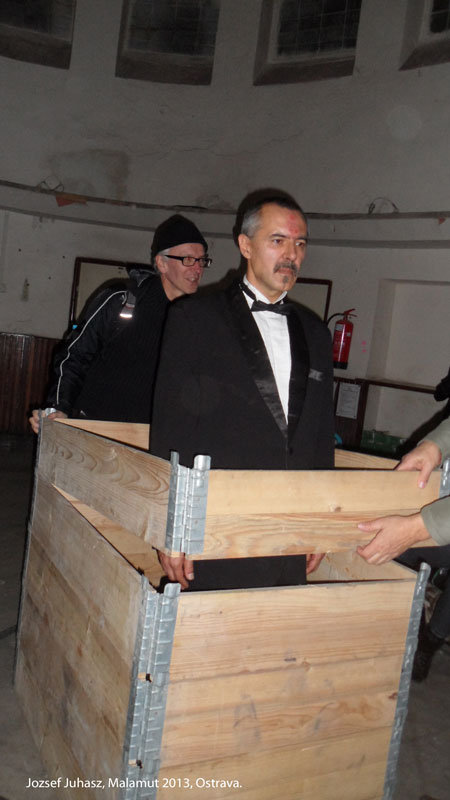
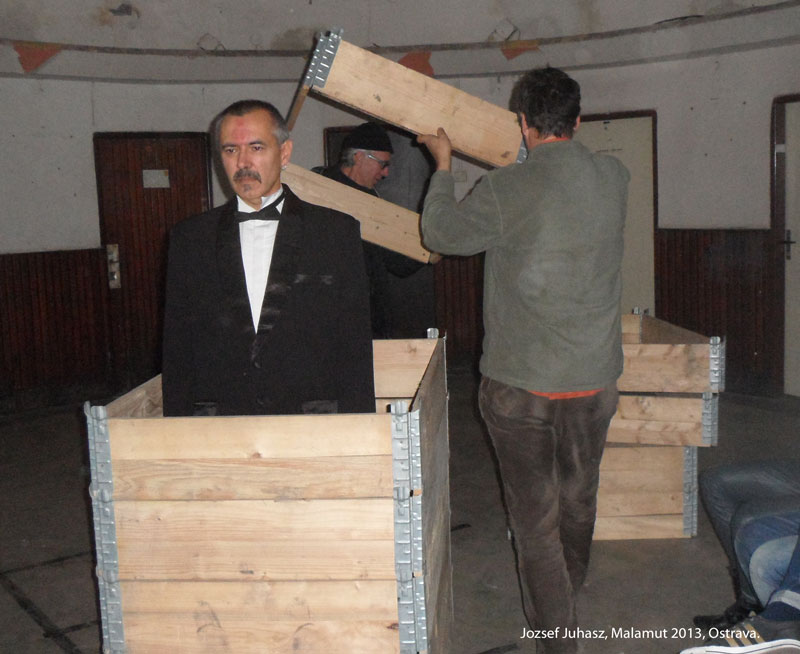
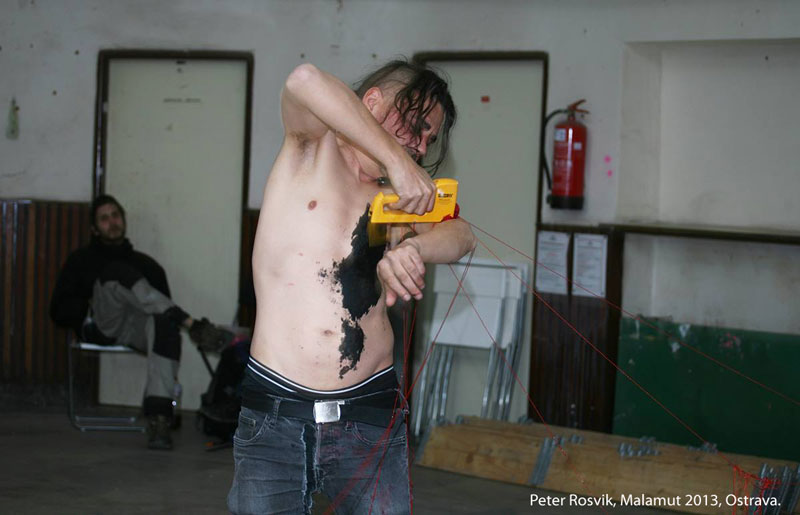
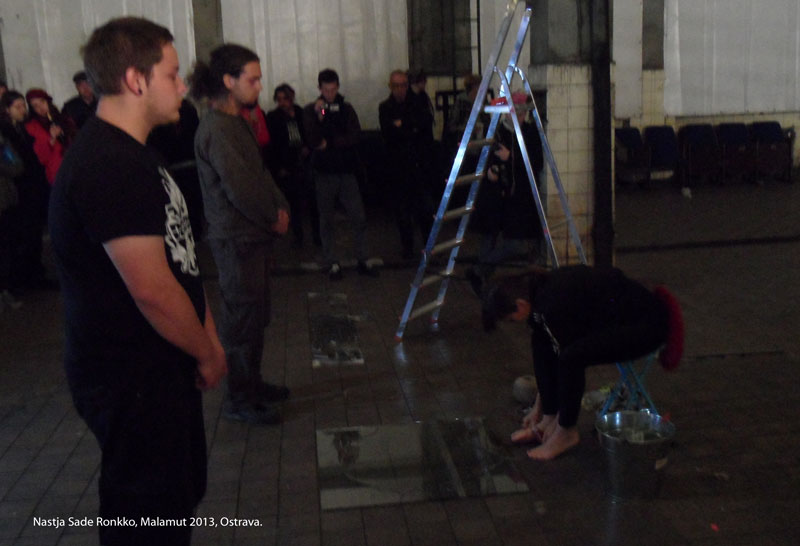
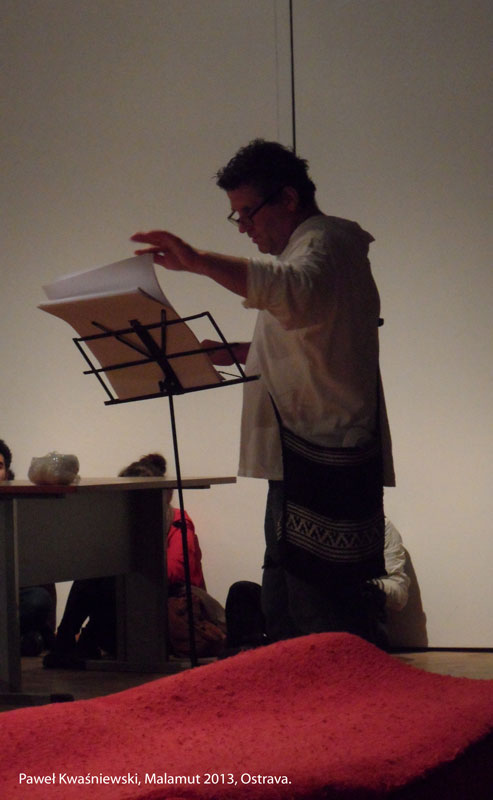
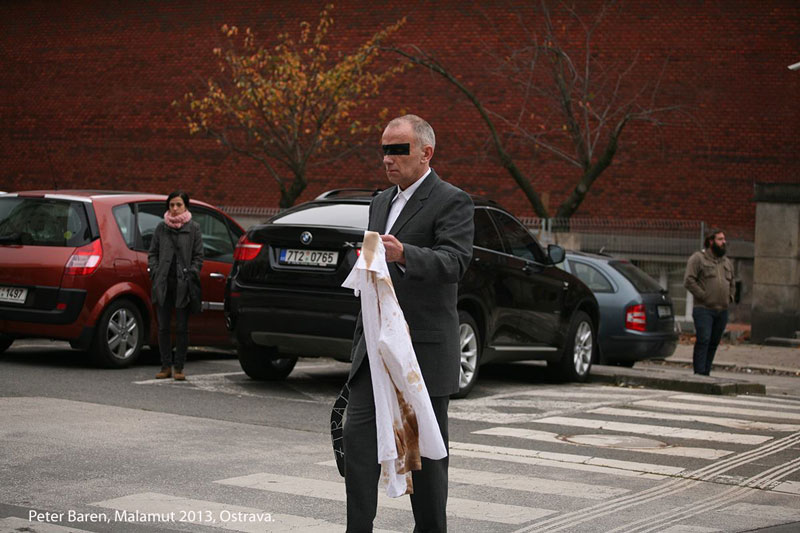
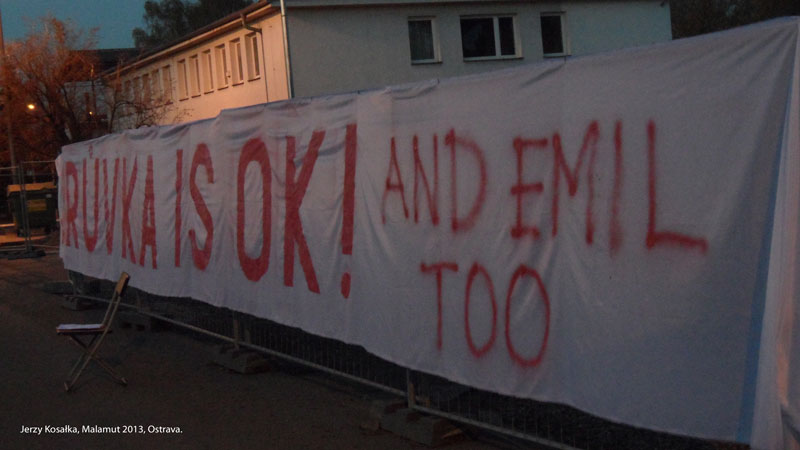
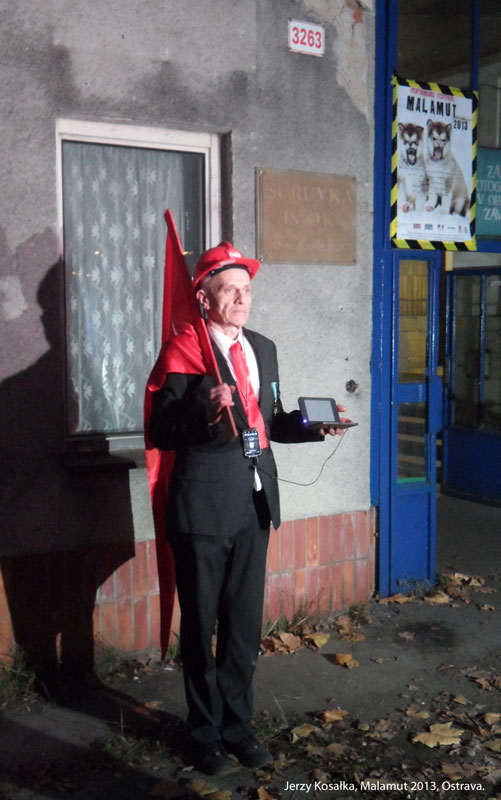
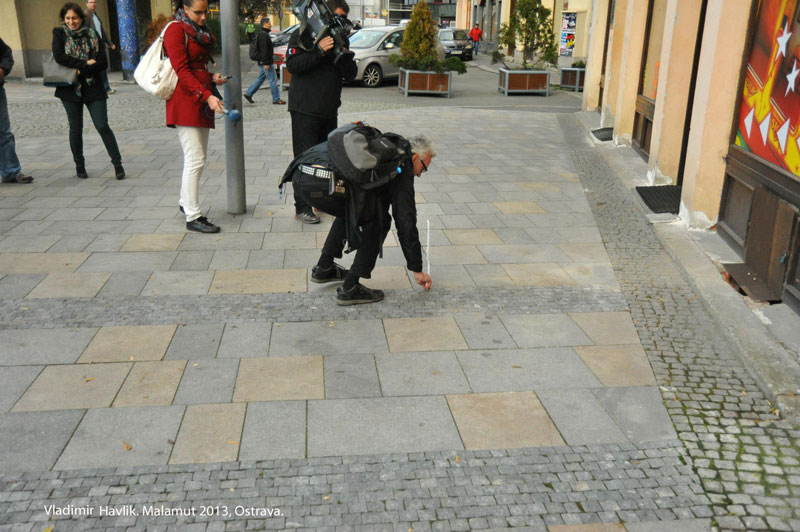
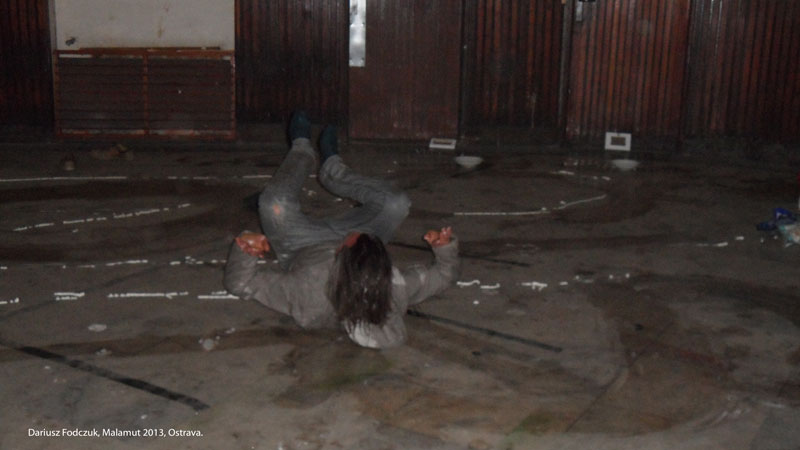
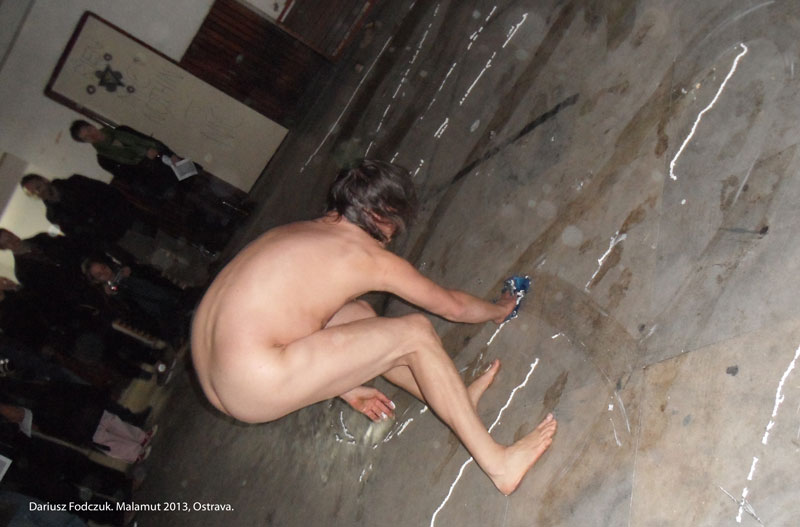
SURUVKA IS OK. AND EMIL TOO. Malamut Performance Art Festival, Ostrava 2013 Małgorzata Kaźmierczak, 2014-01-18 Malamut Performance Art Festival in Ostrava is organised and curated by Jiri Suruvka – an icon of European performance art. Someone, whom artists trust not to use their art to build his own position. Suruvka is a whimsical, demanding and unpredictable person, but entirely open to every form of artistic message. And Malamut 2013 in Ostrava was exactly so. The last festival clearly highlighted two issues – the failure of performance art education and a slow departure away from the traditional, old school approach of this kind of art. Paradoxically – a “traditional” version of performance was presented mainly by young artists, infatuated with their professors and mentors. Loose impressions and gestures in the style of the Black Market artists were presented in large numbers by Thomas Ruller’s students from Brno and were not too interesting. One could not feel any passion in their performances although the younger artists were very excited with the actions that they presented in the difficult conditions of the mine – Dul Hlubina, where the festival took place. Among the artists who used a classic performance art approach certainly very interesting was the performance by Jozsef Juhasz, who started his piece enclosed in a wooden box from inside which one could only hear loud bangs. After some time the public themselves started to dismantled the box in order to save the artist inside, who was dressed in an elegant suit and a bow tie and rhythmically banged his head against the wood. Interesting also was the action by Peter Rosvik from Finland who used the well known props of performance art – paints, beer bottles and roses which he stapled to his skin. His performance, short, concise and visually attractive dealt with his own personal problem – his addiction to alcohol. Sometimes performances based on the personal experiences of artists are very often banal, however this time through the conciseness of the form, it resulted in a successful presentation. On the opposite side of the spectrum there was a performance by Nastja Sade Ronkko, which by its complicated structure and the large number of props and objects disorientated the viewers. The action probably referred to the negative attitude of the artist towards the killing of animals. A master of performances in the good old style of the 80s was as always Paweł Kwaśniewski, whose characteristics are the fact that he tells the same short story multiple times, in which usually one sentence is repeated as a chorus. One never quite knows whether the story is true or not, but the fact that he repeats it many times makes it absolutely convincing and it becomes trustworthy. Paweł Kwaśniewski varies from other performance artists because he is unafraid of “failures” during his performances. This time it turned out that the gesture marking the structure of the performance – the scattering of china cups one by one – was far too predictable for the public and the artist finished the performance earlier than he had planned. Dariusz Fodczuk always encourages the public to enter into a play which engages all of them and which generates the rhythm and structure of the performance. This time he used two key words: Cleanliness and Nothing (Rien). RIEN was the word which Jean Pierre Ive – an artist from Marseille wrote in various places and this inspired Fodczuk, who wrote it on the floor using a whipped cream spray and then cleaned it away using his clothes – first undressing and then putting the wet creamy clothes back on himself. This apparently humorous gesture is loaded with philosophical reflections on nothingness. Being and nothingness according to Sartre’s philosophy are two complementary elements of a human being – being in itself – a subject and being for oneself – consciousness (that is – nothingness). Games such as making a “wave” or rhythmically puncturing balloons etc. give the viewers no time to wonder about the meaning of what the artist is talking about during the performance. The reflection may however come later. |