











|
|
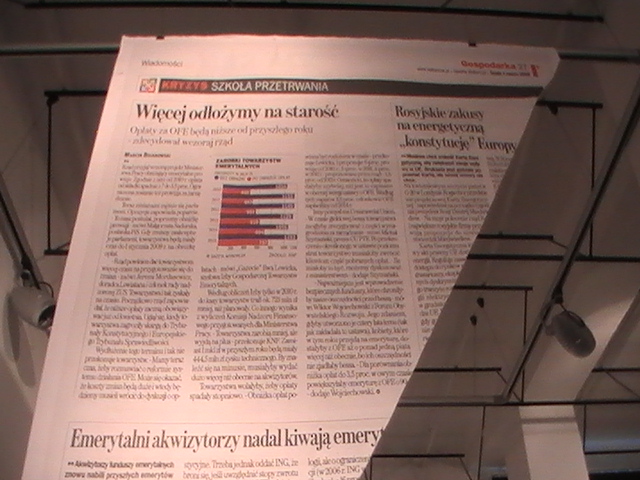
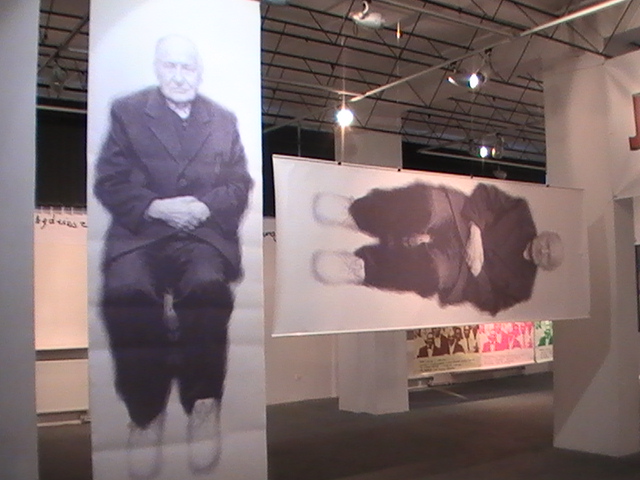
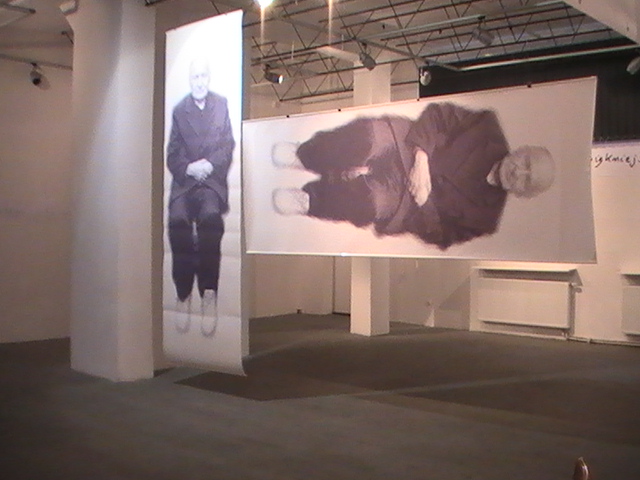
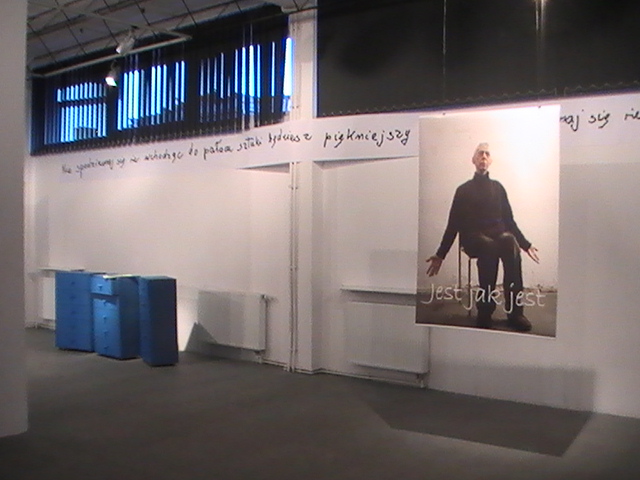
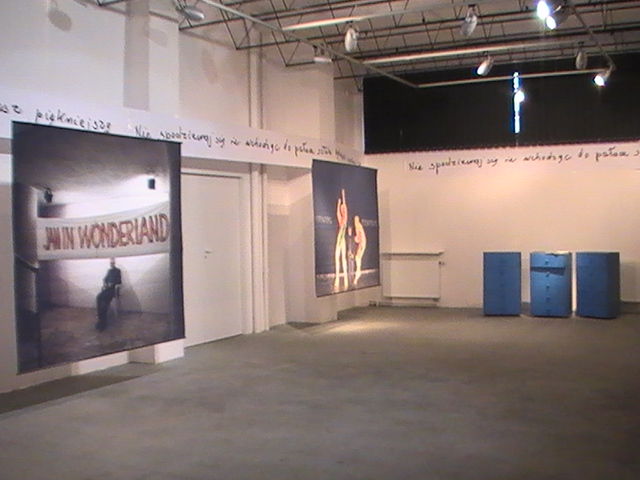
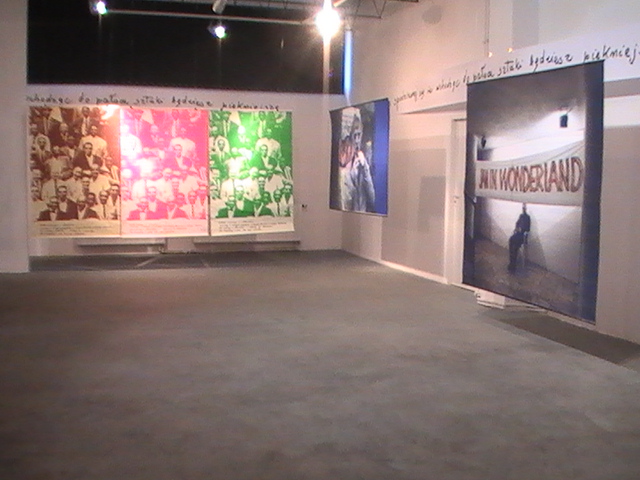
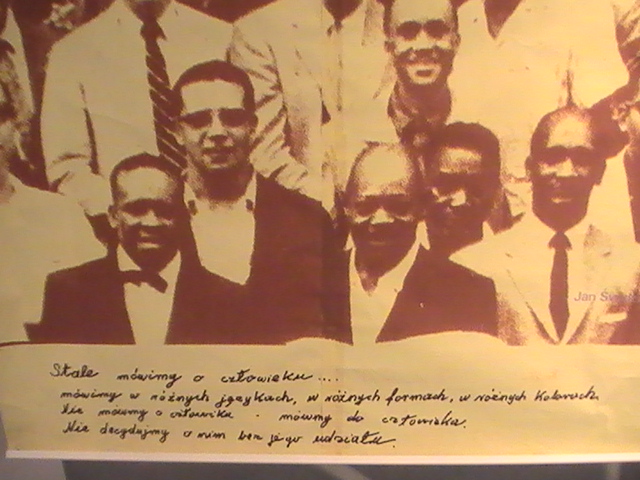
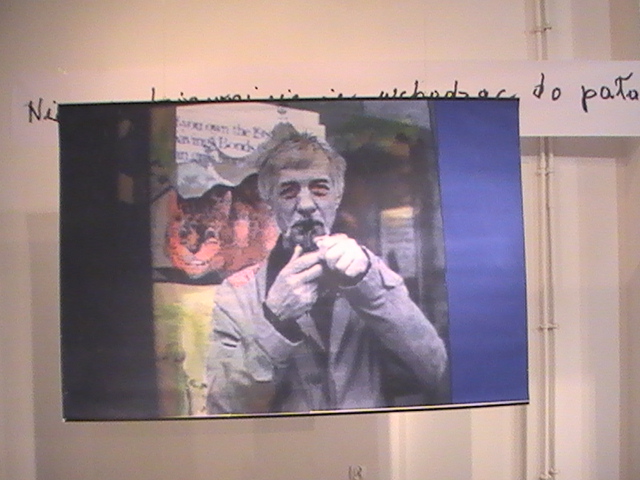
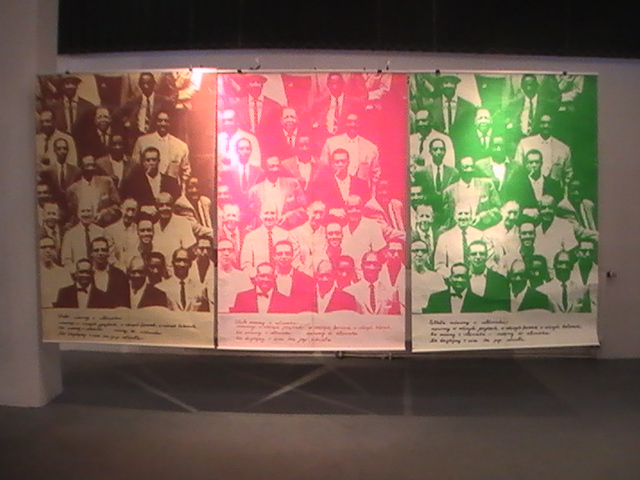
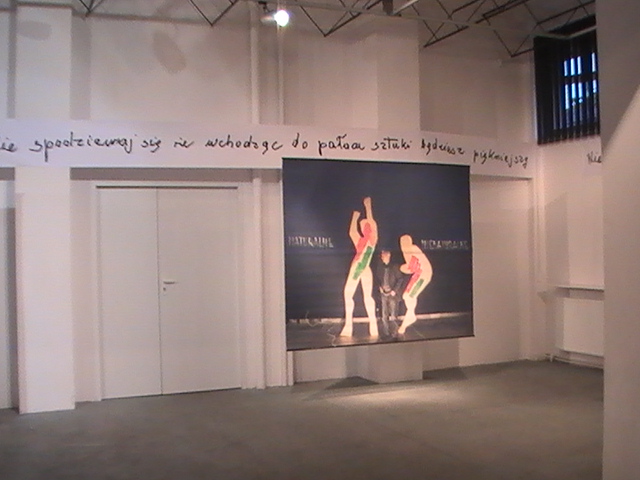
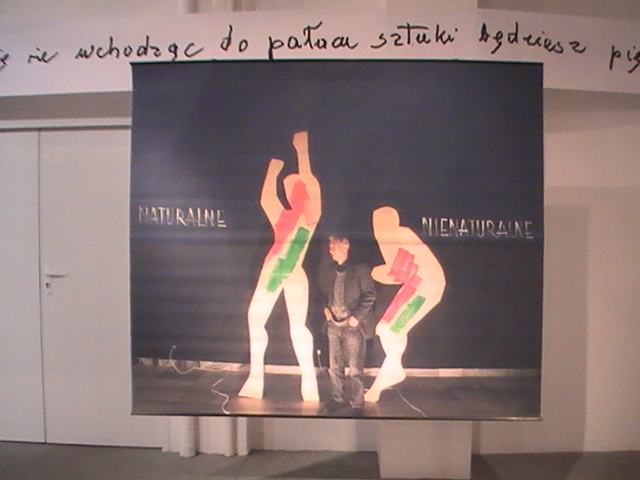
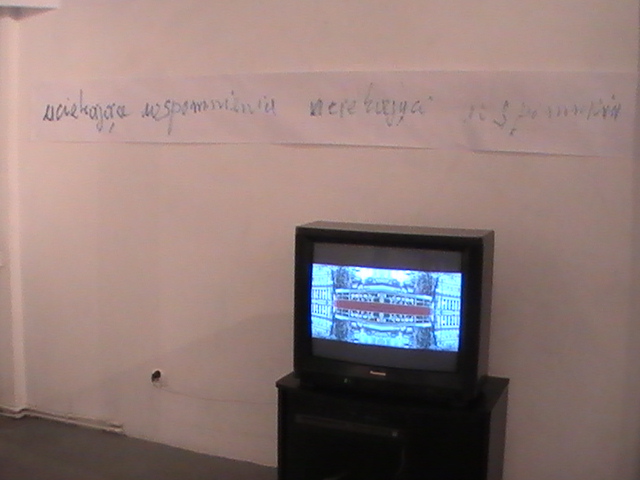
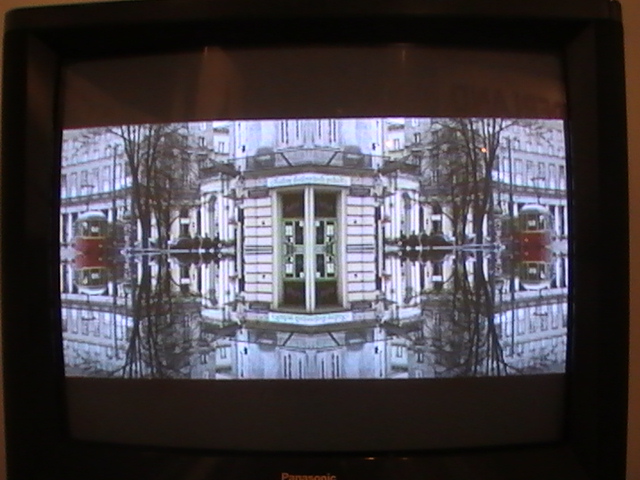
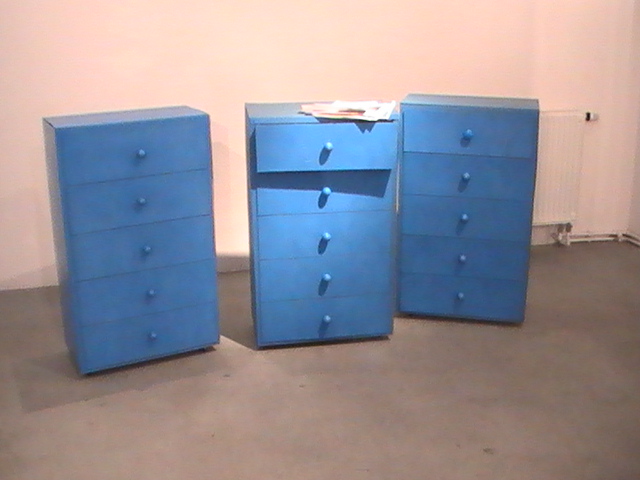
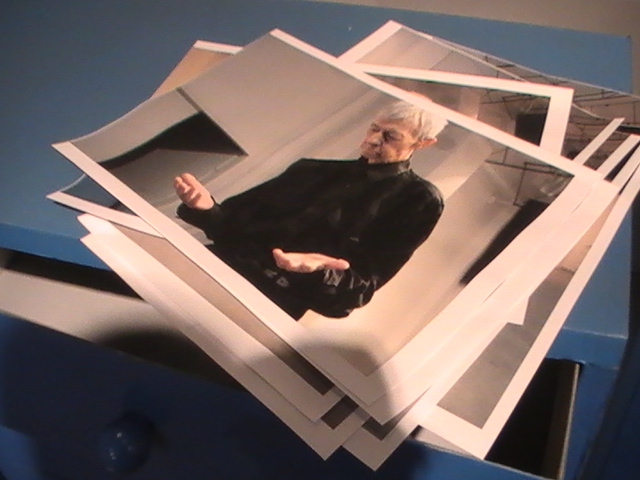
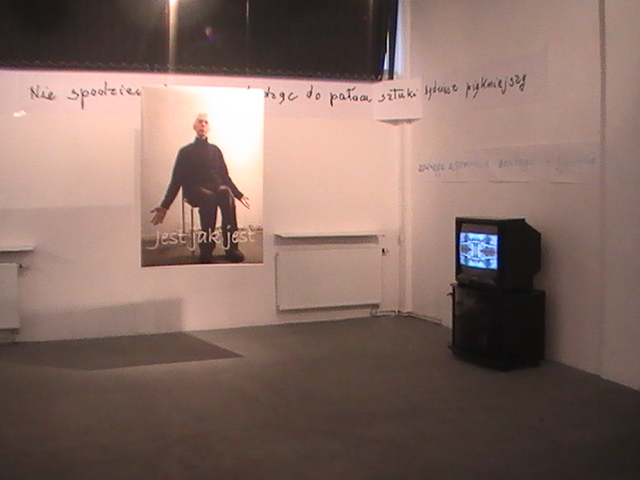
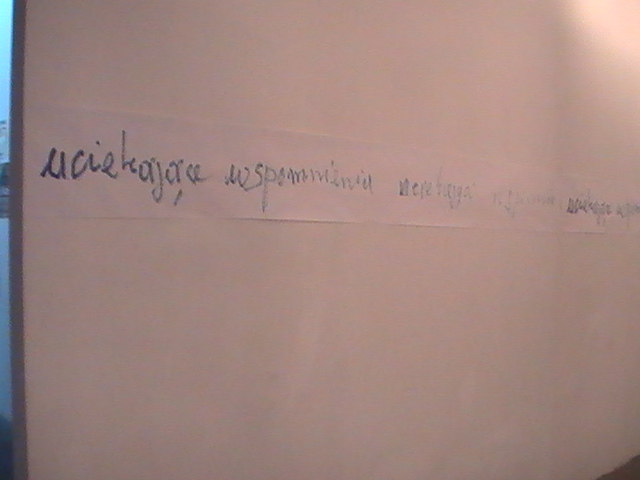
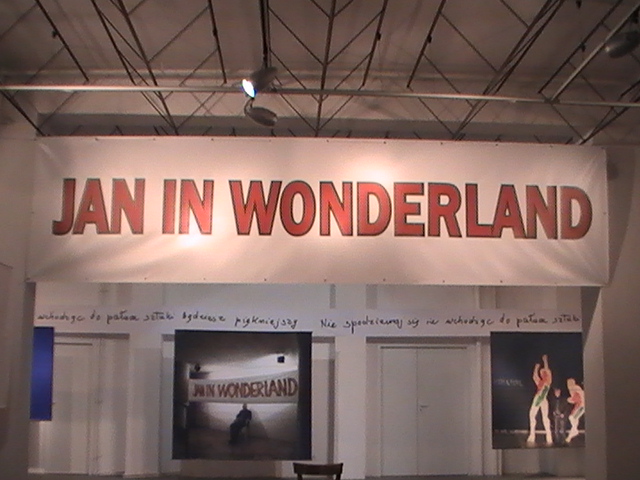
It is as it is Łukasz Guzek, 2011-02-07 "It is as it is", says Jan Świdziński. He is 86 years old. His words may be understood as an expression of resignation, since, at this age, does one still want to make a revolution, if only in art? And maybe it is life advice for the younger, since, after years of going against the tide, does it not appear that we only drift? It is as it is (Jest jak jest) is a title of an exhibition, or, actually, two exhibitions done by Świdziński in the year 2009 in the GSN Gallery in Gorzów Wielkopolski and in ODA Gallery in Piotrków Trybunalski. It is as it is should rather be called a ‘project’ as each of the exhibitions has been slightly differently composed and consists of a slightly different set of works. Therefore, the title motto takes on a slightly different meaning. The curator of each exhibition selects works at their own discretion and composes according to the spatial arrangement. However, the main body of works is selected by Świdziński himself. Also the decision to show works from different years is a decision of the artist. The exhibition is therefore a project by Świdziński. The fundamental content of the exhibition is the author’s message. The exhibition is, by assumption, a survey exhibition, which enables the curators, at each presentation, to relate to the oeuvre of Świdziński as a whole and to its particular aspects or even individual works. Such a method, which consists in creating frameworks open to the thoughts and actions of other people has been used by Świdziński through all his life. In his theory, he has been trying to contain a possibly global picture of “world we live in” (it is a sentence that often repeats in his writings). Humankind is involved in historically shaped economic and social relations. These relations were described by Świdziński as models of ‘logics’ governing our reality in a book entitled Art, Society and Self-Consciousness. Art should be strictly connected with our surroundings and our practical life. It is the pragmatism of Świdziński that he often emphasizes (I am ‘a simple pragmatist,’ he says about himself). This locates his theory close to the philosophical pragmatism of Dewey and Shusterman. Świdziński acts as an artist in the domain of a broadly conceived conceptual tendency. His art is of ephemeral nature. It takes the form of a lecture, talk. A material trace of his art were mainly publications: texts, manifestos, books and also posters, banners, occasional jobbing prints. The conferences and festivals that he organized and co-organized should also be treated as forms of art. It was artistic activity in the sphere of ‘ideas’ (or, as Kosuth puts it, ‘making meanings’). At the same time it was a form of art that assumes the participation of others (that is, discourse, in the understanding of Derrida). Another field of artistic activity of Świdziński is photography, broadly used in conceptual art. Those were photographs “found” or works created with the use of photography, drawing on structuralistic methods, referring to the art of the media performed in the artistic circle of the Workshop of the Film Form (Warsztat Formy Filmowej), with which Świdziński closely cooperated in the 1970s. The artistic experience of the structuralistic use of the media will be later observed in his art many times. Świdziński is the creator of artistic contextualism (I use this adjective here in order to differentiate the meaning of the term from what is meant by ‘contextualism’ in domains other than art). The contextualism of Świdziński is both the contextual theory and practice that is based on it, that is ‘art as contextual art.’ Świdziński uses the word ‘as’ in order to – as he explains – express doubt whether the old term ‘art’ can still be used and whether what we call art really still deserves this name, as it is something very different from what art used to be before. A similar doubt is expressed by Kosuth when he writes “artist as anthropologist,” not being sure whether the role which is performed by the artist today still has anything in common with the one that he performed in ‘old’ art. Both stands originate simultaneously. Kosuth publishes the text The Artist as Anthropologist in 1975 and Świdziński - the manifesto Sztuka jako sztuka kontekstualna (Art as Contextual Art) in 1976 in Lund, Sweden, but the key thesis of the contextual theory already appeared in writing in the text Model kina (The Model of the Cinema) published in the year 1975. The main thesis of contextual art is as follows: Object "O" assumes the meaning "m" in time "t", place "p", situation "s", in relation to person/persons "x" then and only then. It reflects the connection of meaning with ‘here and now’ of specific person(s). So, in the contextual formula there is described ‘making meaning’, which is what Kosuth pointed to as being the essence of the project of conceptual art. Therefore, the contextual thesis is proved by Świdziński in his artistic practice, mainly in performance (as in the area of live art it is easier to capture the space-time relation of meaning), but also through using other forms that are more static and constitute specific artifacts or visual objects. However, contextual thesis does not solely apply to art, but also to practical life, our ‘being in the world,’ which is historical by nature (hence the changing logics, adequate to the changing forms of the socio-political and economic system, which was described in the book Art, Society and Self-Consciousness). The contextual thesis – the key to art (theory and practice or, as it used to be said, ‘theory- cum-practice’) of Świdziński, as it were, ‘gives patronage for’ It is as it is exhibition – it is hung in the form of a lightbox over the entrance to the gallery in Piotrków Trybunalski. However, not only for this particular exhibition, as it is ‘permanently exhibited’ there. Let us remind that the gallery in Piotrków Trybunalski is a place where, for over a decade, there has been organized one of the most important performance art festivals in the world. Świdziński is one of its initiators (Ryszard Piegza being another one) and its current president. In the light of the contextual thesis there can also be understood the watchword – life motto of Świdziński, contained in the title of the exhibition – “It is as it is” – ‘here and now.’ At the same time, it is the only available state of human psycho-physical condition in its literality and directness. Świdziński describes it using the metaphor of a tourist who, while travelling, meets other people for a moment (in a given moment), exchanges trifle remarks and afterwards everyone travels on, each person in their own direction. Therefore, the title “It is as it is” itself results from the depth of many years of artistic work, but also from life experience, connected with each other by a relation of reciprocity. Similarly, a series of performance art pieces Puste gesty (Empty Gestures) is based on the way of behavior and gesticulation, often nonconscious, that are filled with meaning at the moment of ‘making’ – ‘here and now’, in a specific dialogic situation of meeting other people. Actually, a photograph from Empty Gestures performance, presenting one of such gestures made by the artist has been placed on the poster and constitutes the pivot around which there was composed the exhibition in Gorzów Wielkopolski (the work was also displayed at the exhibition in Piotrków Trybunalski). However, at the centre of the exhibition in Piotrków Trybunalski there is a banner saying “Jan in Wonderland,” which comes from Real Time - Story Telling exhibition in BWA Gallery in Sopot organized in the year 1991 (it was a copy made for the purpose of the exhibition in Piotrków, since the original work was lost). Under this banner, in 1991, Świdziński read an excerpt from Alice in Wonderland and this action was repeated in Piotrków Trybunalski (there he read another excerpt, in an improvisation during the opening of the exhibition). This ‘wonderland’ – admiration for the wonders of the world, despite everything, can be understood as the creed of Świdziński, to which he has been faithful all his artistic life. That is why it the exhibition has been organized around this work. The exhibition is composed of two parts. The first, ‘historical’ one, comprises works created since the 1970s. It starts with Stale mówimy o człowieku (We are always talking about people) from the year 1979, which was also the year of publishing the book Art, Society and Self-Consciousness, in which Świdziński sums up the contextual ‘investigations’ of the first period, after announcing the manifesto of contextual art. The work makes use of an accidentally ‘found’ photograph of a crowd, in which it is difficult to distinguish a single person. “Let us not speak about the people, but to the people” – appeals Świdziński. The work has taken the form of installation consisting in a series of posters, a different color each, which refers to the method of mass culture image multiplication that was used by Warhol (at the exhibition in Piotrków Trybunalski there are three posters). This part of the exhibition also includes works from the 1980s: Naturalne – Nienaturalne (Natural-Unnatural) (1987) and Jestem z powrotem (I’m back) (1989) – one would like to add: ‘despite everything,’ as the work was created after Świdziński’s return from the USA to Poland, which was not a place supporting artistic activity at that time. The last piece in this ‘historical’ subset is the work entitled W porządku / It's O.K. from the year 1994. Also in this case there was used a photograph ‘found’ in the mass media iconosphere. The photograph was taken during the first ‘Gulf War.’ It was so popular and broadly discussed at that time that it became one of the media icons of that war. It presents soldiers standing over a charred body. Świdziński, as he often used to do, provided the photograph with a caption in the form of a question: “And what about this man on the ground – he’s dead.” This simple statement is an unusually pertinent critical comment about the way mass media function, changing each tragedy into a picture – a process known to Warhol and described by postmodern theoreticians as the ‘crisis of representation.’ Świdziński subjected this press photograph to treatment that formally referred to structural experiments of the 1970s. The photographic image was analyzed with the use of visual aids. In this process, a realistic photograph turned into an abstract sign (the work is composed of a series of four photographs, each more and more abstract and, as it can be said, also abstracted from reality in which the photograph was originally ‘found’). In the second part of the exhibition there can be found a subset of works from the years 2000 – 2010: Starość nie radość ( Anno Domini is the Trouble) – 2004, Uciekające wspomnienia (Fleeing memories) – 2007 (video and banners), Jest jak jest (It is as it is) – 2009 and a work – banner, exhibited as a frieze around the whole gallery, saying: Nie spodziewaj się, że wchodząc do pałacu sztuki będziesz piękniejszy (Don’t expect to be more beautiful when you enter the palace of art) – 2009. The text, as always in the case of works of Świdziński, is handwritten, which gives the works original, ‘performative’ character of action. These works result from the depth of – let us not be afraid of the word – old age (there is also a work that consists in an enlarged cutting from a newspaper hung like a flag, concerning an ongoing social debate about pensions in Poland). The works based on ‘old age’ are in accordance with the contextual thesis, so they result from the ‘here and now’ condition of the artist. Contextualism retains its relevance here and finds application. However, it is not only stylistic consequence, but also a proof of the validity of the contextual thesis, which works both when applied in artistic practice and in life. In the set of works shown at the exhibition there is one important omission, evasion. There is not one of the key works in the oeuvre of Świdziński, closing an important stage of using the contextual thesis in art. The work in question is entitled Anomia (Anomie) (1998). The term ‘anomie’ here taken from the sociology of Durkheim, denotes a state in which in society there are no longer constant values. Therefore, Anomie is the culmination of the analysis of social processes that were contained in the book Art, Society and Self-Consciousness twenty years earlier, discussing, among other things, the phenomenon of counterculture from the historical perspective, i.e. the consequences of ‘logics’ governing our reality. Therefore, this work should by no means be understood as the ‘traditional’ lament of the elderly over ‘these days.’ Świdziński is not a moralizer. He is not practicing relativism (which would be a form of the former ‘grumbling’), either. No, no way. This is an observation of a ‘simple pragmatist’ and not a self-appointed ‘authority.’ The world, saturated with the media and many messages, does not ‘revolve’ around values. There are no values – but not because they have ‘fallen.’ They have simply ceased to be necessary, have become impractical, nonfunctional. The artist only observes this state, but does not judge it. Expressing this truth means that in ‘being in the world’ there has been noticed ‘a turning point’. At the same time it is a statement of certain ‘here and now,’ which results from the essence of the contextual thesis. In other words, but still using the terminology of Świdziński, values appear to be ‘empty’ – our ‘here and now’ is also ‘empty’ in this sense. So, what remains? There remain I as the artist, with my own condition, which today is old age. It may be ‘trouble’ but ‘it is as it is.’ Anomie is a certain liminal state. By not taking it into account we even more strongly contrast two attitudes and two periods of life and artistic activity, here shown through the arrangement and the selection of the contents of the exhibition. “Now it is as it is. It’s O.K.” – these are ‘empty words’ that are precisely an expression of anomie (they have been taken from a text accompanying the work entitled Anomie. This state has been identified and in the same way ‘crossed’ in a shift towards another, relevant ‘here and now’ – old age. The exhibition places Świdziński in the centre of ‘wonderland.’ At the same time, it shows a change of the place of ‘making meanings’ that happens with age: from an interest in the world and providing it with a critical comment to a turn towards oneself, to one’s own condition. It is like looking in the mirror of Alice from ‘wonderland.’ All the time, however, Świdziński remains faithful to the pragmatics of the contextual thesis, which – as it appears – works at every stage of creative life. Łukasz Guzek Jan Świdziński, It is as it is, Ośrodek Działań Artystycznych, Piotrków Trybunalski, ul. Dąbrowskiego 5. Exhibition open from June 18 to July 17 2009. |