










|
|
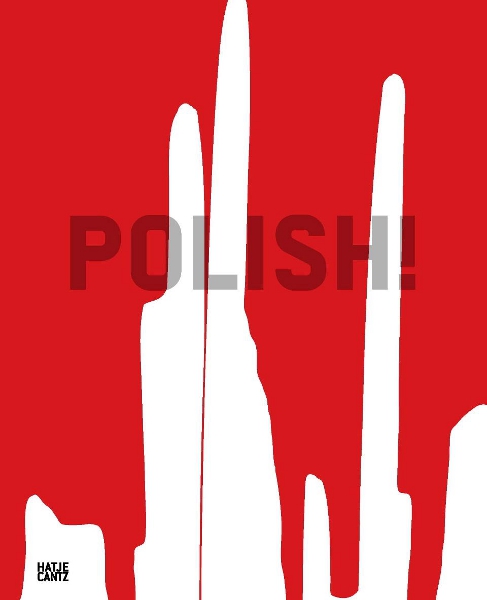
To Polish Art Paulina Olszewska, 2011-08-17 The review of the publication Polish! Contemporary Art from Poland.1 I would not be lying to say that nowadays a label "Polish" draws attention all around the world: either in music, design, literature or any other area of culture. In contemporary art Polish names, often hard to remember, and even harder to pronounce, are proudly mentioned on the lists of more and more important art shows and events. They could easily be found both in established galleries and important international art collections. Taking this into account, there is nothing unusual that such an album as Polish! Contemporary Art from Poland was published. When visiting any kind of bookstore offering a wide selection of publications in any cultured city in Europe, you would be surprised how few titles about the subject you can find in English (or any other language). And learning Polish just to get to know more about the Polish art scene it is not a good solution. Although a few years ago very successful and popular books like New Phenomena in Polish Art after 2000, published by Warsaw’s Ujazdowski Castle2, or Artur Zmijewski’s Trembling Bodies3 came out also in an English version and more and more important exhibitions’ catalogues are bilingual, it is still hard to get them outside of Poland. Another positive aspect of Polish! is that it was published by one of the strongest and widely known publishing house - Hatje Cantz. It is not only recognizable for its high quality design, best reproductions and a wide selection of subjects, but also for its ability to distribute books all around the world. The quality of graphic design of this publication is above reproach. The cover catches attention: it is clear, surprising and strong at the same time. Using a part of Artur Uklanski’s work Untitled (Warsaw Uprising ’44-Żoliborz) was undoubtedly the best move. On the one hand he is the most successful Polish artist known worldwide. On the other – it is an intelligent and sensitive play with the Polish national colors: red and white and the form of the album’s title. The letters are transparent but they are also convex and rugged, contrasting with a smooth and shiny background. These two elements strongly underline the book’s content. The content has been maintained in the same style: as an easy and clear guide. Anda Rottenberg wrote an introduction to the publication which presents 37 artists in an alphabetic order. The same outline was used for every artist – a short text written by various authors on one side, accompanied by a large amount of illustrated material on the other. The visual characteristics of Polish! plays a main role and catches the most attention. This positive visual aspect is especially appreciated since most of the photos are not only strict reproductions but also documentation from the most important individual exhibitions, projects and international events. The graphic design side of the album is really strong, well prepared and it continues to pleasantly surprise from the very first page. Like a really nicely packaged present which suggests that inside you are going to find a unique gift. As mentioned before the publication consists of an introduction written by Anda Rottenberg presenting 37 contemporary artists from Poland. The first question that comes to one’s mind is: why exactly those 37 artists? They belong to different generations, movements and were even living in different parts of the world, why were they chosen to be presented in this book? What criteria was used and which categories were followed during the selection? The Zak| Branicka Foundation (unfortunately no concrete name was given), who were responsible for publishing explain, that the most important factor was "the appearance on an international art scene, outside Poland", despite the differing generations. Unfortunately no other details were given and this criterion seems to be very superficial and… quite general. It creates the impression that in reality no particular selection was made. Actually any artist may easily fit this category. In that case could this selection of 37 artists be called representative for the whole Polish art scene? Or is it just a subjective selection? If this selection is based on private taste then what has shaped it? Presentations organized by established public institutions? Commercial success? Or maybe the voices of professionals: critics, curators and theorists? The Zak| Branicka Foundation mentions something about the huge interest in art form Poland, comparing it to the success of Young British Artists of the 80s, but the thought is not developed further, leaving readers with many questions unanswered. The introduction, "Reverse Gear" written by Anda Rottenberg does not give any answers to these questions either. Actually the title does not suggest that this is its function. It is more of a retrospective look into the past influenced strongly by the academic background of an art historian. The introduction has a concise form and includes all the most important facts and names from the Polish art scene of the second half of the 20th century. It is well explained and correct enough to give a general overview of Polish historical contexts. After this essential introduction the reader is guided through the art "from Poland". Texts, despite a few exceptions, were written by well known non-Polish professionals: curators, journalists, critics and directors of important art institutions. The main reason for this is, I suppose, the placing of artists not in a limited, local context, but presenting them as acknowledged members of the international art scene. That is why readers can find texts written by such noted figures as: Susanne Titz, Dobrila Denegri, David Elliott, Timothy Person, Ernst von Alphen or Daniel Marzona. The Polish authors are also the most successful and recognizable critics: Adam Budak, Sebastian Cichocki, Stach Szablowski and Monika Szewczyk. In my opinion it was a good move to invite such international authors and to avoid the situation where it looks as if only Polish professionals are able to write about art from Poland. While reading one text after another it is easy to recognize, both by the style and the way of writing, whether the authors had already something to do with the artists described, or if it is their first contact with them and their works. Most of the texts are clear, logical and easy to understand. Either they describe the general concept of the art or concentrate around a few significant works leading us to the core of the artistic pose or creation. When I finished reading it, I had the impression that the publication is not about "art from Poland" but rather about "the artists from Poland". All texts about particular artists have an individual character and concentrate on the artists’ attitudes, but do not try to somehow connect the artists or give any kind of a common background. Like for example in the texts about the New Surrealists: Jakub Julian Ziolkowski or Tomek Kowalski are not only individuals but also the most representative leaders of a brighter language that appeared on the art scene in Poland. The same could be said about Wojciech Bakowski, who developed his own individual form of expression, but who came out of a very interesting art scene in Poznan. Highlighting that as his background could have given more ways to interpret his works (especially the earlier ones). Or even when it comes to the Grupa Ladnie, created by Wilhelm Sasnal, Marcin Maciejowski and Rafal Bujnowski amongst others, its phenomena is based not on the unity of those artists but also on their individual attitudes. It is also hard to understand how it happened that artists like Gosha Macuga nominated for the Turner Prize, Alicja Kwade who grew up in Germany or Adam Adach who is based in Paris could get the label "from Poland"? It is even harder to understand what is bubbling in the "Polish pot" while the introduction is talking not about the current situation, but goes back to the past, and its various impacts on the presented artists. I have already agreed that such a publication as Polish! is needed and there is no doubt about it. However, another problematic question seeking an answer is: "Who is this album published for?". If it is dedicated to the professional reader, it is too informal and there is too little solid information. If the book has been made as a part of a popular series for anyone who is interested in art, it is not compact enough. I am not sure if the readers who somewhere, somehow have heard about "art from Poland" would really be able to get enough information about it. "Polish!" has all the ingredients to create a really good publication: interesting design, good authors, a lot of photographs, but somehow all of them put together do not serve an overall delightful and unforgettable dish, but instead a blend of individual flavors. The remaining question is: where is the failure? My last comment concerns the whole idea of defining artists: both as individuals and through their art. In the Foreword it is clearly explained that the term "Polish" will not be used to describe artists. According to the editors, such a thing as "Polish art" (as well as Norwegian, German or any other) and the understanding of art in national categories does not exist at all and cannot be used as a link connecting the chosen artists. In this case the term "from Poland" is more appropriate. The mysterious and impersonal Zak| Branicka Foundation underlines the fact that it is difficult to exactly define what "being Polish" means. "How we can define the Polish in ‘Polish art’ (…)?"- they asked. I think it is a good question, which should be asked about the art scene in Poland. The country is still very closed and hermetic: most Polish artists are native Poles and they don’t have to ask themselves "Who am I? Where do I belong?". Nowadays art, despite few exceptions, does not exist or develop in isolation. It is in permanent move and influenced by different factors. It can be clearly seen through the phrase "based in", which is often used to better describe the current state of living and creating for the artist. This kind of issue has been already discussed and re-thought a few decades ago in Western Europe and currently it is not crucial any longer. Especially among the younger generation of artists a strict line cannot by made. Possibilities for international education and development which they have, let them be "citizens of the world", where nothing is constant and certain. Returning to the "Polish courtyard" I would like to ask a question: What does it exactly mean to be "from Poland", according to the "Polish!" publication? Is it predestined by a place of birth? A place of growing up? Or maybe a place of education, which has a strong impact on a further professional career. Is it the language which is spoken? Or the language of the ancestors? Or is it simply one’s state of mind? Who decides where art comes from? Artists themselves, telling: "my art is from Poland" or a group of professionals labeling art as "from Poland" and "not from Poland"? All these questions lead straight to the term "from Poland" and its exact meaning. Is it really the best way to describe and unite artists and their art? Isn’t it more nationalistic than "Polish", which the Zak| Branicka Foundation opposes in the Foreword? From my point of view the term "from Poland" refers more to the old fashion idea of belonging to one’s land, a certain territory that could be found on a map. It can lead straight to the 19th century definition of nationality, against which the author/ authors of the album’s Foreword tried to stand. I think the term "from Poland" has a strong negative meaning, because somehow suggests being "grounded" and bound to one, concrete place. Without any doubts I agree with the opinion that a national definition of art nowadays has no reference and does not exist. But still are we not more "-ish" then "from"? I consider the first term more abstract and suitable to describe individuals, who could be linked by different and sometimes even opposite factors and still have something in common. There is no "Polish art" that is for sure, but there still can be "Polish artists"- individuals, who have different backgrounds, live in different places and create various works of art, that are united through a "Polish" character. I think that at this point one question should be asked: Does the problem lay in the terms used, which have simply lost their primary meaning and need to be redefined? Now, when more and more young Polish artists live abroad, especially for a short time, and for the first time in history a non-Polish artist represented Poland in the Venice Biennale, it would really be good to start rethinking the concept of "Poland", "Polish" and "from Poland" on the artistic field, just like Great Britain, France, Germany and a few other countries have done a long time ago. Before we all get confused and sucked into our "Polish world". Let me summarize, the publication Polish! and its meaning. In 2007, when the New phenomena… book launched in Klub Bunkra Sztuki in Krakow, Monika Branicka, one of the editors, said that despite of a lot of negative comments on it, actually there was no counterbalance, because that book was the first of its kind on the Polish art scene. Only when another one appears can there be a discussion, which one was more valuable and appropriate. The same problem has come back with the new Polish! publication. It is the first internationally available book presenting contemporary Polish artists. I will treat it as a first step and an initial attempt, which will lead to more discussion and more publishing on the subject. And I just hope it would not be the last one.
|